 SHOP PRODUCTS ON SALE NOW
 of 6000+ Reviews
 EXPRESS NEXT DAY DELIVERY


Choosing a professional dog grooming dryer isn’t simply about wattage or price.
If you’re deciding between a single motor and double motor dog grooming dryer, the real question is how airflow output fits into your daily workload, breed mix and appointment schedule.
Drying sits at a critical point in the grooming process. It connects bathing to clipping and finishing. When airflow matches your working pattern, the entire groom runs more smoothly. When it doesn’t, drying quietly becomes the bottleneck in your day.
If you’re actively comparing models, you can browse our full range of professional dog grooming dryers and blasters
Contents
- 1 Single Motor vs Double Motor Dog Grooming Dryer: The Core Difference
- 1.1 When a Single Motor Dog Grooming Dryer Is the Right Choice
- 1.2 When You Need a Double Motor Dog Grooming Dryer
- 1.3 Single Motor vs Double Motor Dog Grooming Dryer: Comparison Table
- 1.4 Why Airflow Matters More Than Heat
- 1.5 Drying, Coat Preparation and Clipper Performance
- 1.6 Common Mistakes When Choosing a Dog Grooming Dryer
- 1.7 How to Choose Based on Your Real Workload
- 1.8 Conclusion
- 1.9 Frequently Asked Questions
- 1.9.0.1 Is a double motor dog grooming dryer worth it?
- 1.9.0.2 What is the difference between a dog grooming blaster and a dryer?
- 1.9.0.3 How powerful should a professional dog grooming dryer be?
- 1.9.0.4 Is a single motor dog grooming dryer strong enough for Labradors?
- 1.9.0.5 Do you need heat on a dog grooming dryer?
Why drying matters more than you think
A proper groom doesn’t begin with drying. It begins in the bath.
Incomplete rinsing, product residue or incorrect shampoo selection all make drying harder and affect coat finish. Choosing the correct formulation for coat and skin type is critical, particularly when working with sensitive or reactive skin. If you regularly groom dogs with delicate skin, our guide to Dog Shampoo for Sensitive Skin explains what to look for in professional formulations.
For a broader breakdown of shampoo types across coat conditions, see our Ultimate Dog Shampoo Guide
Conditioned coats separate more cleanly under high-velocity air. Double coats release the undercoat more efficiently. The Clippers perform better. Scissor finish improves.
Drying is not isolated; it is directly shaped by what happens before it. If you’re reviewing overall wash setup and ergonomics, our guide to Dog Grooming Baths for Salons & Homes looks at positioning and workflow considerations that influence drying efficiency.
How Professional Dog Grooming Dryers Actually Work
Professional dog grooming dryers rely primarily on high-velocity airflow, not heat.
Airflow:
- Displaces water from the coat
- Penetrates through the undercoat
- Separates hair from root to tip
- Prepares the coat for clipping and scissoring
Heat assists, but airflow does the real work, especially on dense coats.
The key difference between a single motor and a double motor dryer lies in air volume and penetration power.
Before choosing between single and double motor systems, it helps to understand where drying actually sits within the grooming chain.
Single Motor vs Double Motor Dog Grooming Dryer: The Core Difference
A single motor dog grooming dryer typically operates between 1,500W and 2,800W.
A double motor dog grooming dryer generally operates between 2,800W and 4,500W+.
Both perform the same function. The difference is:
- Drying speed
- Undercoat penetration
- Efficiency across multiple large breeds
- Long-term physical strain
The question isn’t which is more powerful. The question is which suits your workload.
When a Single Motor Dog Grooming Dryer Is the Right Choice
Single motor systems are often ideal for:
- Home-based professional groomers
- Mobile grooming vans
- Salons grooming fewer than 6 dogs per day
- Smaller or single-coated breeds
- Backup drying stations
On breeds such as Spaniels, smaller Doodles, Terriers and toy breeds, a single motor system provides sufficient airflow to remove moisture and lift the coat for finishing.
If your daily schedule is controlled and you rarely handle heavy double coats, the additional airflow of a double motor may not significantly change your day.
Single motor dryers are typically:
- Lighter
- Slightly quieter
- Easier to reposition
- More compact
For many growing salons, they represent a practical and cost-effective starting point.
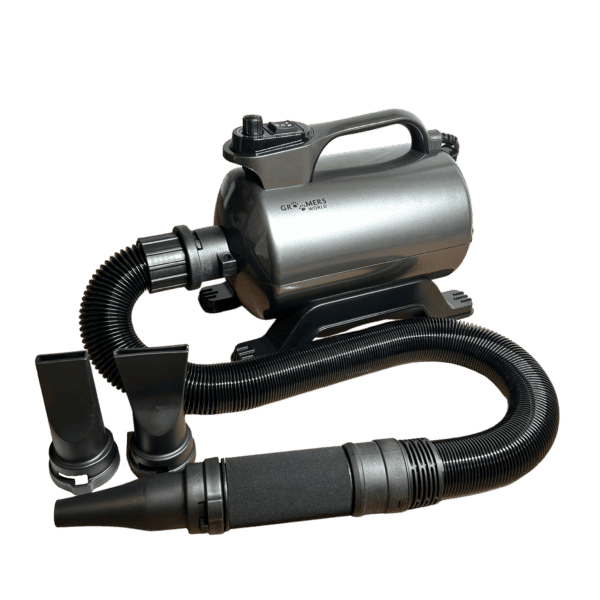

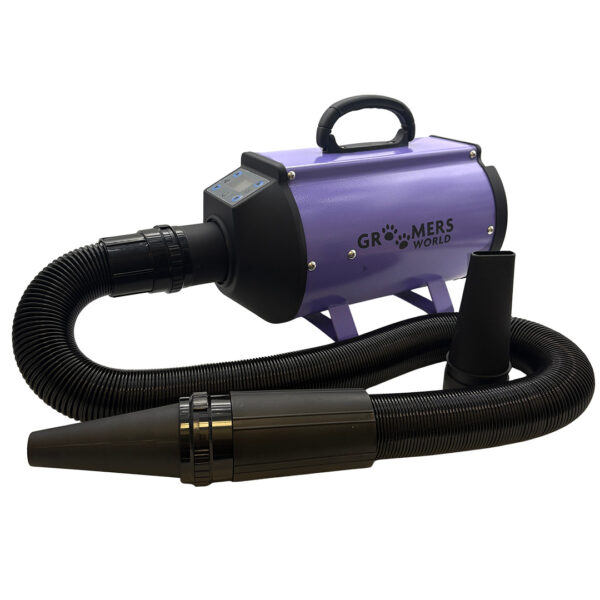
Single Precision Blaster with Heat LCD Screen (GWAS)
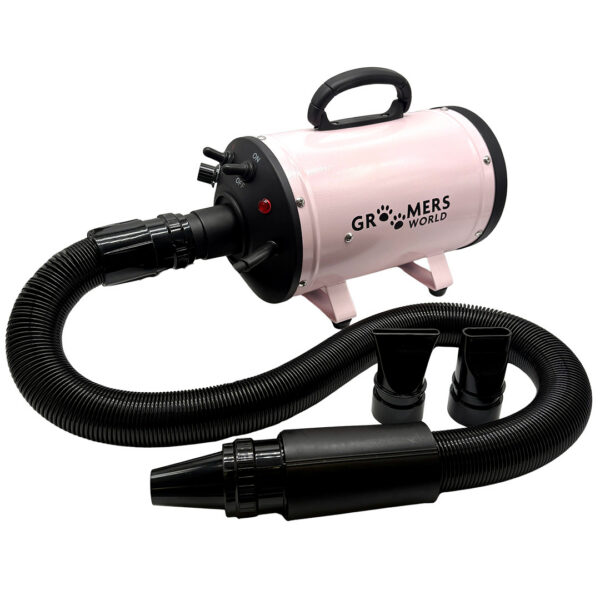
Single Motor Blaster with Heat (GWBS)
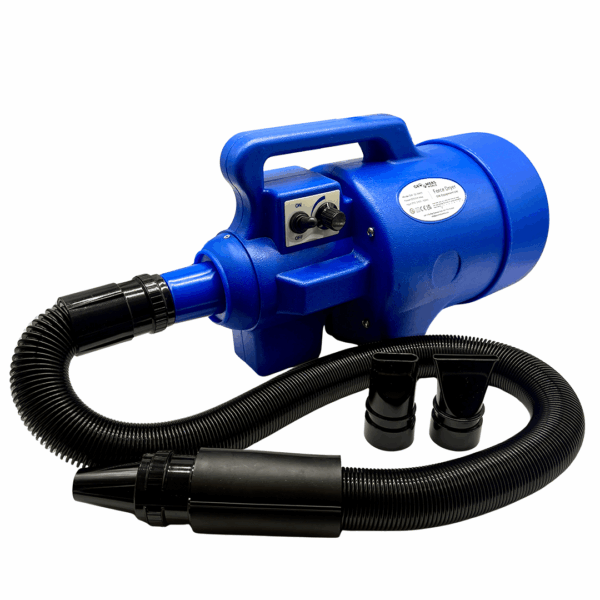
When You Need a Double Motor Dog Grooming Dryer
As breed mix changes, so do drying demands.
Double-coated breeds such as Labradors, Golden Retrievers, German Shepherds, and Huskies hold moisture deep within their undercoats. Surface drying alone is not sufficient.
A double motor dog grooming dryer increases airflow penetration, allowing:
- Faster water displacement
- More effective undercoat removal
- Better coat separation before clipping
- Reduced drying time on large breeds
Across a full schedule of heavy-coated dogs, the time savings can be substantial. Over the course of a day, improved airflow can reclaim significant working time.
For higher-volume salons grooming 8+ dogs per day, drying efficiency directly affects revenue capacity.
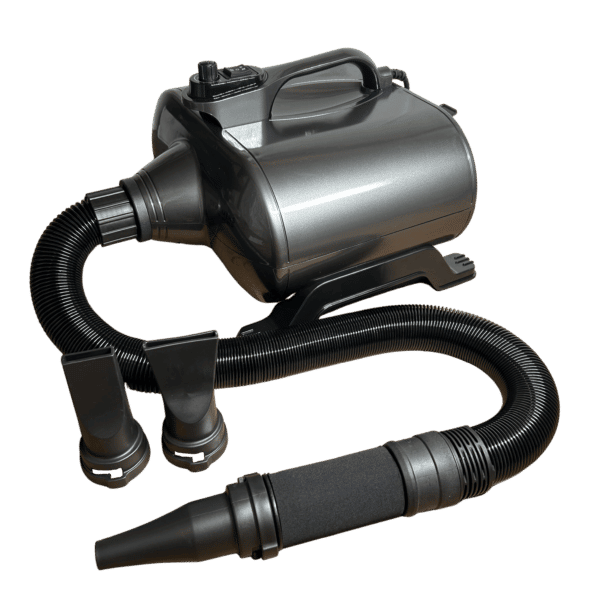
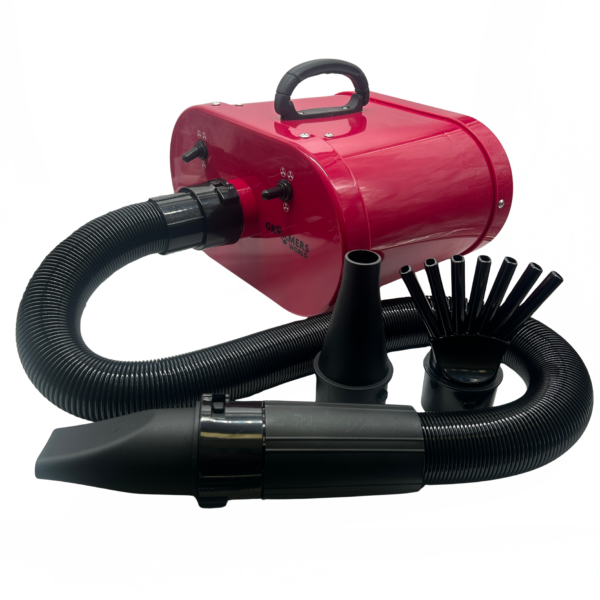
Blaster / Dryer Double Motor with HEAT (GWDHD)
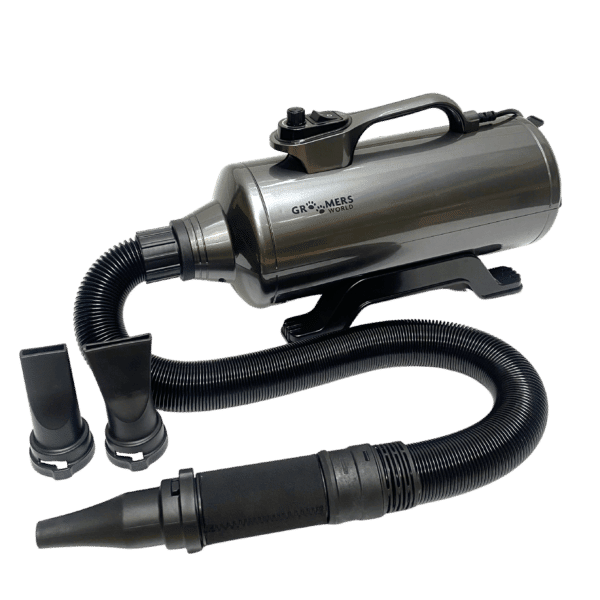
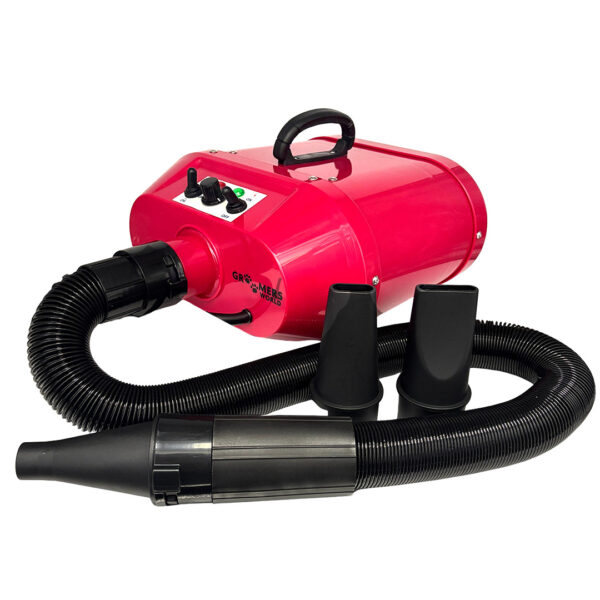
Blaster / Dryer Double Motor with Heat (GWA22)
Single Motor vs Double Motor Dog Grooming Dryer: Comparison Table
| Feature | Single Motor Dog Grooming Dryer | Double Motor Dog Grooming Dryer |
|---|---|---|
| Airflow Power | Moderate airflow suitable for small to medium coats | High airflow designed for dense undercoats and large breeds |
| Drying Speed | Suitable for controlled schedules and lighter workloads | Noticeably faster on heavy or double-coated breeds |
| Coat Penetration | Effective on lighter coat types and single coats | Deeper penetration into thick undercoat layers |
| Noise & Portability | Generally lighter, more compact and easier to reposition | Slightly heavier due to dual motor system |
| Best For | Low to moderate daily workload | High-volume professional salon environments |
| Typical Daily Use | Fewer than 6 dogs per day | 8+ dogs per day or heavy breed mix |
| Salon Type | Home-based, mobile or growing setups | Established, high-throughput professional salons |
Why Airflow Matters More Than Heat
It’s easy to assume that heat is what dries the coat. In professional grooming, airflow is the primary drying force.
High-velocity air physically pushes water away from the hair shaft and forces moisture out from the undercoat. It separates the coat from root to tip, allowing trapped water to escape rather than sit beneath the surface.
Heat plays a secondary role.
It can:
- Improve comfort in colder salons
- Assist with fluff drying
- Help refine curly coat finishes
- Support final styling
But heat alone does not penetrate dense undercoat effectively. On double-coated breeds in particular, insufficient airflow leads to longer drying times, uneven separation and moisture trapped close to the skin.
This is where the difference between single and double motor systems becomes practical rather than theoretical.
On lighter coats, a single motor dryer provides adequate airflow to displace moisture and lift the coat for finishing. On dense double coats, the increased air volume of a double motor system penetrates deeper and reduces overall drying time.
Airflow capacity determines efficiency. Heat refines the finish.
Drying, Coat Preparation and Clipper Performance
Drying is not simply about removing visible moisture. It is about preparing the coat for clipping and scissoring.
Even slight dampness changes coat tension. An undercoat that hasn’t been fully separated increases drag across the blade. Clippers may require additional passes, and the coat finish becomes less consistent.
When airflow properly opens the coat:
- Undercoat releases more cleanly
- Blades glide with less resistance
- Tension across the coat becomes more predictable
- Scissor lines sit more evenly
On lighter or single-coated breeds, a single motor dryer is typically sufficient to achieve this preparation.
On heavy double coats, however, deeper airflow penetration from a double motor system makes a noticeable difference. The coat separates faster and more completely, reducing resistance during clipping and saving time across the appointment.
This is where airflow output directly affects workflow.
The difference between single- and double-motor systems often shows up not just during drying but also during finishing.
Common Mistakes When Choosing a Dog Grooming Dryer
Choosing a dryer based on headline specifications alone can lead to long-term inefficiencies. The following issues are common in both new and expanding salons.
Focusing Purely on Wattage
Wattage does not automatically equal effective airflow penetration.
Two dryers with similar wattage ratings can perform very differently depending on motor design, air velocity and hose system. A higher wattage figure may sound impressive, but if the airflow design is inefficient, drying performance will not reflect the number on the box.
When comparing single and double motor systems, airflow delivery matters more than the raw wattage label.
Prioritising Heat Over Airflow
Warm air feels reassuring, particularly in colder environments. However, heat does not compensate for insufficient airflow, especially on dense or double-coated breeds.
Without strong air velocity, moisture remains trapped beneath the surface. The coat may feel dry externally while remaining damp at the skin level.
Airflow removes water. Heat assists comfort and styling. Confusing the two often leads to slower drying times.
Underestimating Breed Demand
Many salons begin with a lighter breed mix and gradually see more double-coated or heavy-coated dogs added to the schedule.
Equipment chosen for yesterday’s workload can quietly become restrictive as demand changes. A single motor dryer that works perfectly for smaller breeds may struggle when Labradors, Golden Retrievers or Huskies become regular bookings.
Choosing a system that reflects realistic breed demand, not just current volume, prevents early upgrades.
Ignoring Daily Volume and Physical Strain
Drying is repetitive, physical work. If airflow capacity is too low, drying sessions extend. Arms work longer. Appointments run tighter. Fatigue builds gradually rather than suddenly.
Across weeks and months, those additional minutes per dog accumulate into significant lost time and added strain.
When drying consistently feels like the slowest stage of the groom, that often signals airflow limitation rather than technique.
Drying inefficiency rarely feels dramatic. It simply adds minutes to every appointment, and over time, those minutes reduce capacity and profitability.
How to Choose Based on Your Real Workload
The decision between a single motor and a double motor dog grooming dryer should reflect how you actually work, not what sounds more powerful on paper.
A single motor system is typically appropriate when:
- You groom fewer than six dogs per day
- Most bookings involve small or single-coated breeds
- Portability is important
- You are building or refining your first professional setup
A double motor system becomes a practical investment when:
- You regularly groom eight or more dogs per day
- Double-coated breeds form a consistent part of your bookings
- Drying time limits your scheduling capacity
- You want to reduce repetitive strain during heavy drying sessions
- You plan to increase volume or expand the breed range
There is no universal “best” dog grooming dryer.
There is only one system that supports your workload efficiently.
For lower-volume salons and lighter coats, a single motor dryer offers controlled, sufficient airflow.
For busier environments and heavier coats, the additional penetration of a double motor system improves efficiency, finishing consistency and long-term workflow comfort.
Conclusion
Drying is the stage that connects bathing to finishing. It affects undercoat removal, clipper performance, scissor precision and overall efficiency.
Single motor dog grooming dryers provide controlled airflow for lower-volume or smaller-breed environments. Double motor systems deliver increased penetration and speed for heavy coats and busier professional salons.
Choosing correctly isn’t about buying the most powerful machine available; it’s about investing in equipment that supports your workflow today and your growth tomorrow.
Explore our full range of Dog Grooming Dryers & Blasters to find the system that fits your salon setup.
Frequently Asked Questions
Is a double motor dog grooming dryer worth it?
A double motor dog grooming dryer is worth the investment if you regularly groom double-coated breeds or handle high daily volumes. The increased airflow significantly reduces drying time on dense coats, which improves efficiency and reduces physical strain. For lower-volume salons or smaller breeds, a single motor system may be perfectly sufficient.
Professional groomers typically choose shampoos based on function rather than scent or brand alone.
What is the difference between a dog grooming blaster and a dryer?
In professional grooming, the terms “blaster” and “high velocity dryer” are often used interchangeably. Both refer to dryers that use strong airflow to push water out of the coat rather than relying on heat. Some groomers use “blaster” to describe more powerful, high-velocity systems, particularly double motor models.
How powerful should a professional dog grooming dryer be?
Power depends on workload and breed type. For small to medium breeds and lower daily volumes, a single motor dryer between 1,500W and 2,800W is usually adequate. For heavy double-coated breeds or busy salons grooming 8+ dogs per day, a double motor dryer between 2,800W and 4,500W provides better efficiency and undercoat penetration.
Is a single motor dog grooming dryer strong enough for Labradors?
A single motor dryer can dry a Labrador effectively, but drying time will be longer compared to a double motor system. If Labradors and other heavy-coated breeds are regular bookings, a double motor dryer will improve speed and reduce strain.
Do you need heat on a dog grooming dryer?
Heat is not essential for effective drying. High-velocity airflow removes most moisture. Heat can be useful in cold salon environments or for final finishing on curly coats, but airflow strength is more important than heat when choosing a professional dryer.
 Salon Equipment
 Dryers & Blasters
 Tables
 Clippers & Trimmers
 Blades & Attachments
 Baths
Baths Spare Parts
 Scissors
 Brands
 Groomers World Scissors
 Kenchii Scissors
 Roseline
 GroomBox USA
 Straight
 Curved
 Thinner
 Scissor Sets
 Blender & Chunker
 Left Handed
 Shampoo, Spa & Perfume
 All Shampoo
 Wahl Shampoo
 Tropiclean Shampoo
 Mud Bath & Spa
 Fragrance
 Health, Hygiene & Liquids
 Tools
Tools Hand Stripping
 Grooming Aids
 Rakes, Nail Clippers & tools
 Brushes & Combs
 Brushes
 Combs
Combs Extras
 Bandanas & Bows
 Retail
 Leads, Collars & Jackets
 Storage & Stationary
 Offers
 On Sale
 Gift Cards
 Equine
 Equine Clippers
 Equine Blades
 Equine Health, Hygiene & Liquids
 Aesculap
 Aeolus
 Andis
Andis GroomBox USA
 Hatchwells
 Heiniger
 Joyzze
 Oster
Oster Roseline
 Tropiclean
 Wahl
Wahl