 SHOP PRODUCTS ON SALE NOW
 of 6000+ Reviews
 EXPRESS NEXT DAY DELIVERY


Drying is often underestimated in professional grooming.
It is not a finishing step; it is a preparation stage that determines how the rest of the groom performs.
If the coat is not completely and properly dried:
- Clippers will not glide cleanly
- Scissor lines will not sit evenly
- Coats will not lift or separate correctly
- Styling becomes harder than it needs to be
A dog that is not dried thoroughly can develop odour within hours. A damp undercoat can irritate skin days after the groom. And in busy salons, inefficient drying quietly reduces daily capacity without being immediately obvious.
Professional dog grooming dryers and blasters are designed to remove moisture efficiently while preserving coat structure and skin comfort. The right equipment does not simply make drying faster; it improves the entire workflow from bath to finish.
You can explore our full range of professional dog grooming dryers and blasters here:


Contents
- 0.1 Groomers World PRO Single Blaster with Heat (GWSHM)
- 0.2 Groomers World PRO Double Motor Dryer with Heat (GWDHM)
- 0.3 Groomers World PRO Double Motor Blaster (GWDMD)
- 0.4 Build Your Own Salon Setup & Save 5% off 4 items or more
- 0.5 Blaster / Dryer Single Motor with HEAT (GWSHD)
- 0.6 Blaster / Dryer Double Motor with HEAT (GWDHD)
- 0.7 Blaster / Dryer Double Motor (GWDD)
- 0.8 Stand / Finishing Dryer
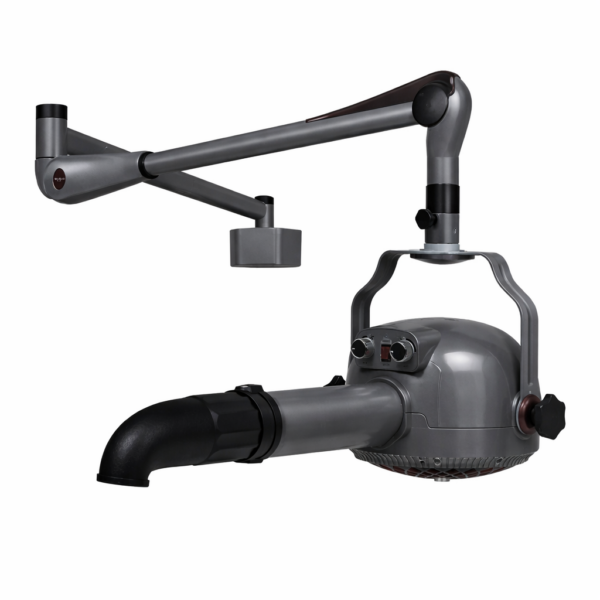
- 0.9 Wall Hanging Finishing Dryer
- 0.10 Blaster / Dryer Double Motor with Heat (GWA22)
- 0.11 Blaster / Dryer Double Motor (GWS22)
- 0.12 Single Precision Blaster with Heat LCD Screen (GWAS)
- 1 Why Proper Drying Matters in Professional Grooming
- 2 Types of Dog Grooming Dryers and Blasters
- 3 How Professional Dog Grooming Dryers Work
- 4 Heat Functions in Professional Dryers
- 5 Building an Efficient Drying Setup
- 6 Maintenance and Long-Term Care
- 7 Practical Drying Technique for Best Results
- 8 Final Thoughts
- 9 Dog Grooming Dryers & Blasters – FAQs
- 9.0.1 What is the difference between a dog grooming dryer and a blaster?
- 9.0.2 Are dog grooming dryers safe for dogs?
- 9.0.3 Do I need heat in a professional dog grooming dryer?
- 9.0.4 How powerful should a dog grooming dryer be?
- 9.0.5 Can I use a human hairdryer on a dog?
- 9.0.6 Why does a dog still smell after being groomed?
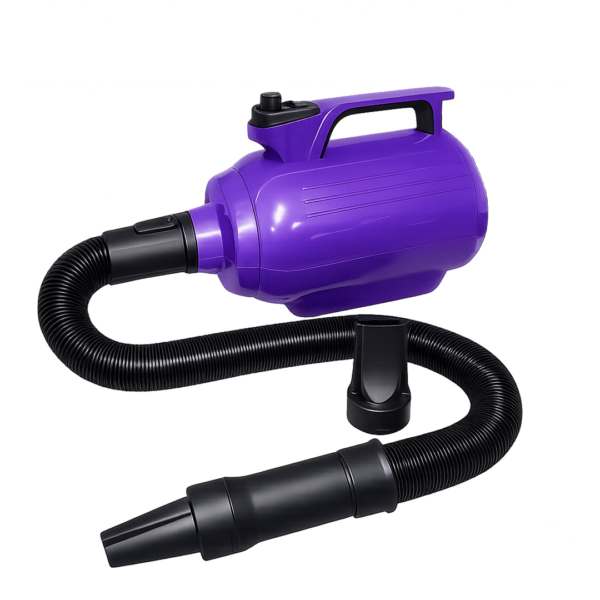
Groomers World PRO Single Blaster with Heat (GWSHM)
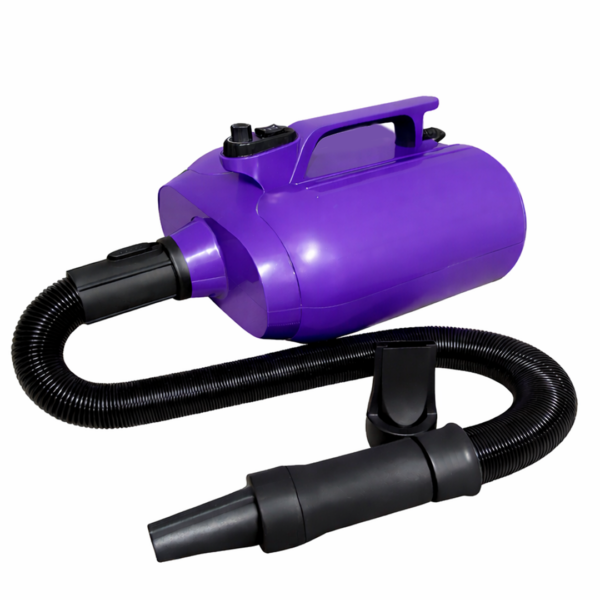
Groomers World PRO Double Motor Dryer with Heat (GWDHM)
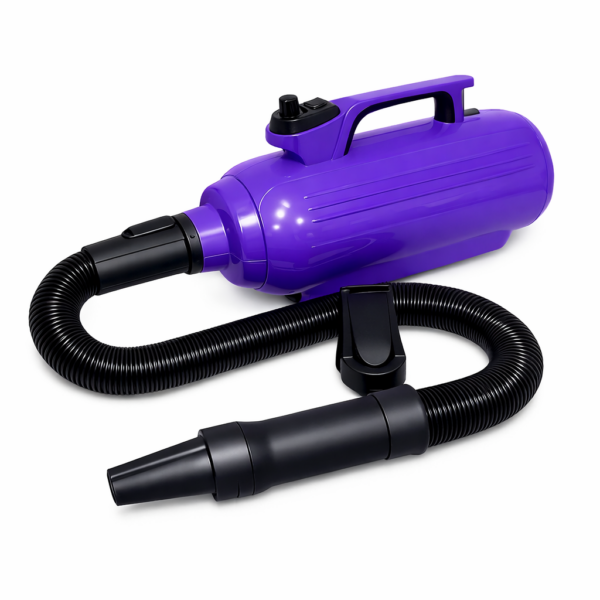
Groomers World PRO Double Motor Blaster (GWDMD)
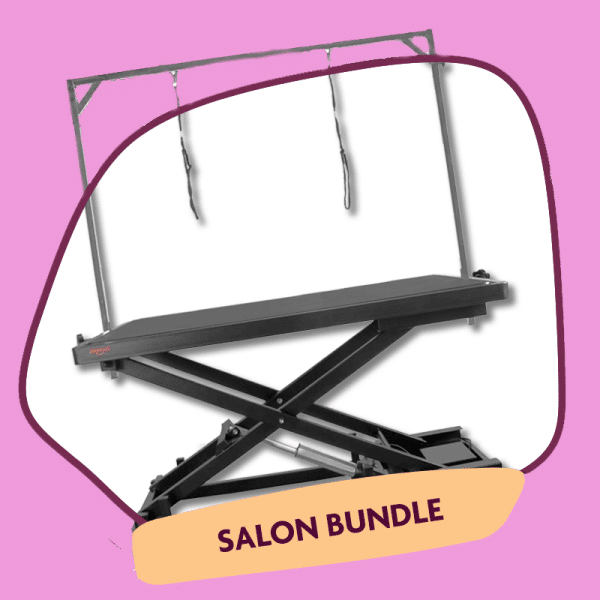
Build Your Own Salon Setup & Save 5% off 4 items or more
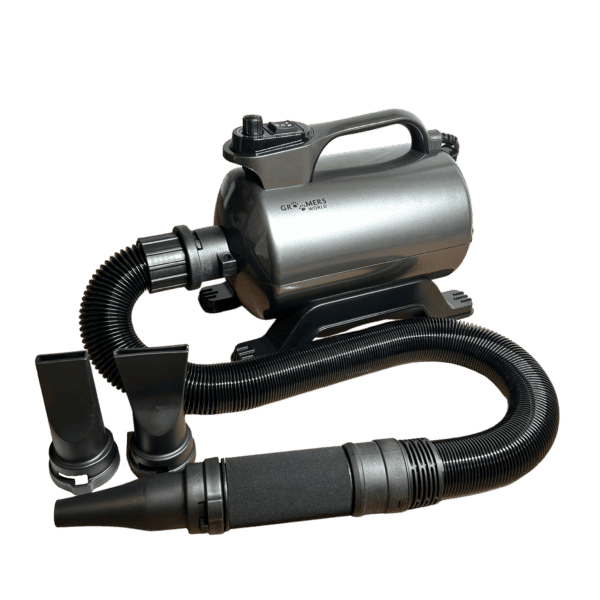

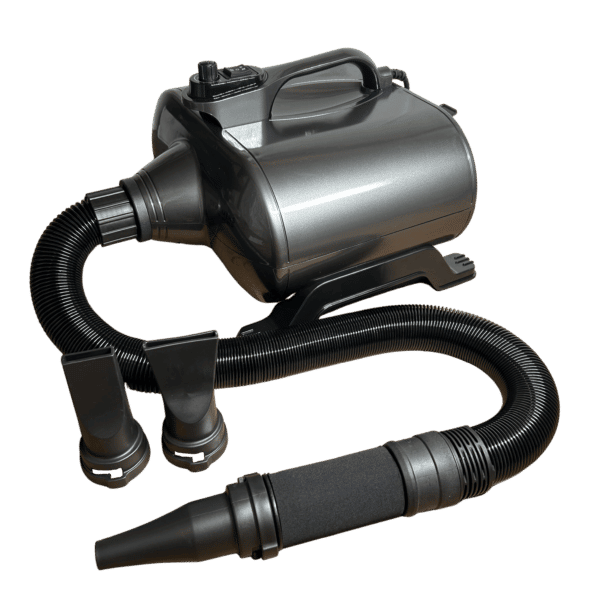
Blaster / Dryer Double Motor with HEAT (GWDHD)
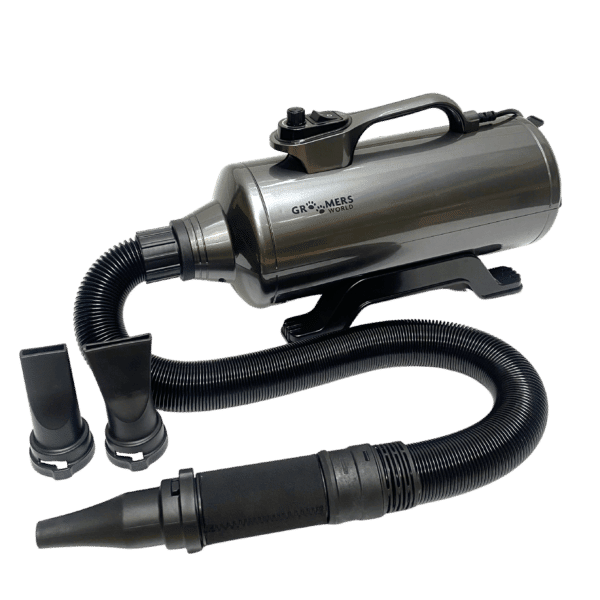
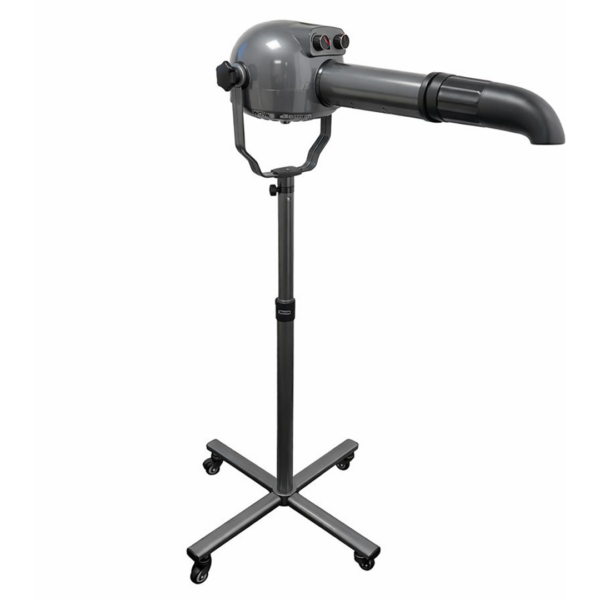

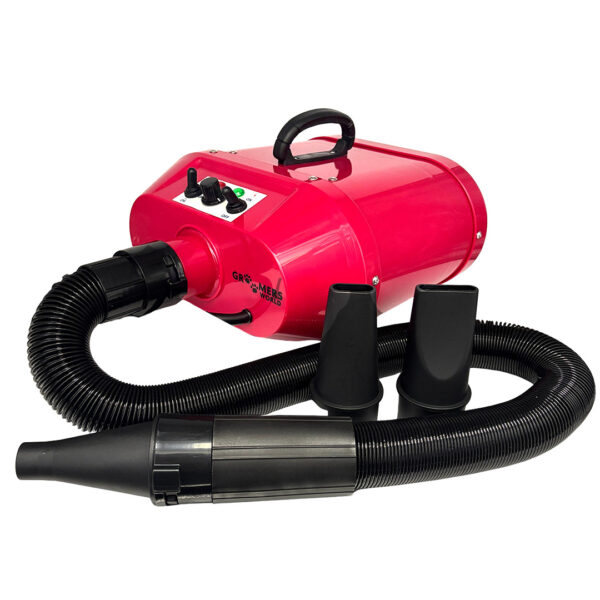
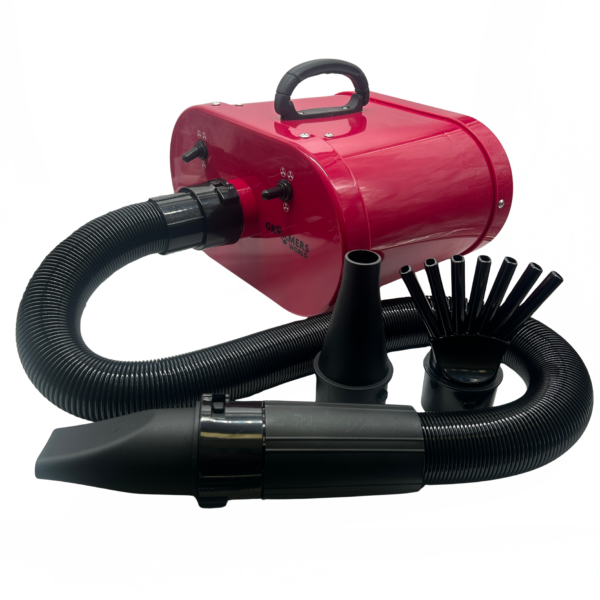
Blaster / Dryer Double Motor with Heat (GWA22)
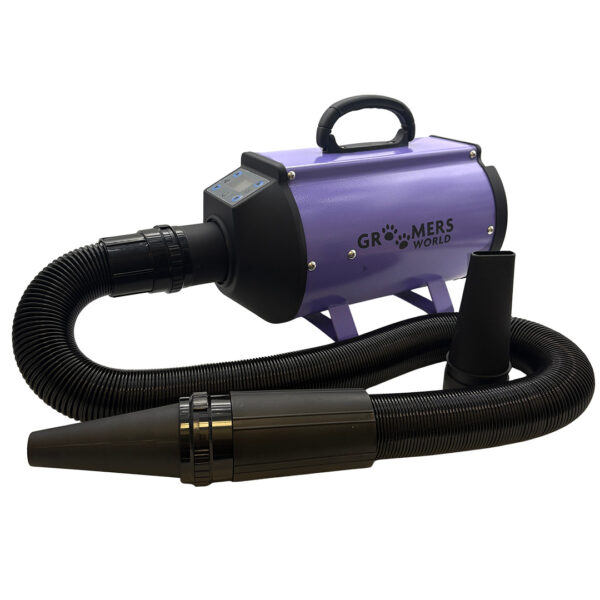
Single Precision Blaster with Heat LCD Screen (GWAS)
Why Proper Drying Matters in Professional Grooming
Coat Health and Skin Protection
Water trapped in a dense or double coat does not simply “air dry.” It remains close to the skin.
In thick-coated breeds such as Huskies, German Shepherds and Golden Retrievers, moisture can sit beneath the top layer for hours if not properly removed.
This creates conditions that encourage:
- Yeast growth
- Bacterial irritation
- Lingering odour
- Matting within dense undercoat
Proper drying removes moisture from the base of the coat and not just the surface.
Drying works directly alongside bathing. A proper grooming bath setup allows safe restraint, thorough rinsing and controlled preparation before airflow begins
If rinsing is incomplete, drying becomes more difficult. If drying is incomplete, skin issues may develop.
The two stages are inseparable.
Coat Quality and Finish
A properly dried coat behaves differently under tools.
Airflow separates hair from root to tip. It creates lift and volume. Clippers pass more smoothly. Scissor work becomes more precise. The finished groom looks sharper and holds its structure longer.
For more on how coat preparation influences blade performance, see our Dog Grooming Clippers Guide
If you’re refining scissor control and finish quality, our guide on Choosing the Right Size Dog Grooming Scissors explains how coat structure affects precision
This difference is particularly noticeable on:
- Doodles and Poodles
- Spaniels
- Double-coated breeds
- Heavy shedding coats
Clients may not understand airflow velocity or motor wattage, but they notice the coat finish immediately.
Workflow and Salon Capacity
Drying time shapes the structure of a grooming day.
A Labrador that takes 25 minutes to dry on a lower-output system may take closer to 12-15 minutes on a higher-capacity unit. Across multiple dogs, that difference compounds quickly.
Drying power influences:
- Daily booking capacity
- Groomer fatigue
- Appointment flexibility
- Overall salon rhythm
The right professional dog grooming dryer supports the pace your business needs to maintain.
Types of Dog Grooming Dryers and Blasters
Understanding the main categories makes selection clearer.
High-Velocity Dog Grooming Blasters
High-velocity dryers, often called grooming blasters, use concentrated airflow to physically push water out of the coat.
They are especially effective for:
- Double-coated breeds
- Heavy shedding dogs
- Thick undercoat removal
- High-volume professional salons
Airflow performs the majority of the work, not heat.
Most professional blasters include:
- Variable speed control
- Interchangeable nozzles
- Optional heat functions
- High-output motors
These units form the foundation of most professional drying stations.
Single Motor Dog Grooming Dryers
Single motor systems typically operate between 1500–2800W and provide controlled airflow output.
They are well-suited to:
- Home grooming environments
- Lower daily volumes
- Small to medium breeds
- Secondary or backup stations
They offer effective performance when matched to the correct workload.
For a detailed workload-based comparison between motor systems, see our guide on Single Motor vs Double Motor Dog Grooming Dryers
Double Motor Dog Grooming Dryers
Double motor systems increase airflow output significantly, typically operating between 2800–4500W, depending on the model.
They are suited to:
- Professional grooming salons
- Frequent double-coated breeds
- Groomers seeking reduced drying times
- High-efficiency, high-throughput environments
The difference between single and double motor systems lies in airflow capacity and performance demand, not overall build quality.
Professional Finishing Dryers
High-velocity systems remove bulk moisture. Finishing dryers refine and style the coat.
These units are often stand-mounted or wall-mounted and are designed for:
- Fluff drying
- Precision scissoring
- Show grooming
- Coat shaping
They provide consistent, hands-free airflow and complement high-velocity systems rather than replacing them.
How Professional Dog Grooming Dryers Work
All professional dog grooming dryers operate on air displacement.
Core components include:
- One or two electric motors
- Air intake system
- Compression chamber
- Flexible hose
- Interchangeable nozzles
- Optional heating element
The motor draws in air and compresses it. As airflow narrows through the nozzle, velocity increases. This concentrated airflow physically pushes water from the coat and undercoat.
This is why professional grooming blasters are significantly more effective than domestic hairdryers.
Heat assists in removing residual surface moisture and refining coat finish, but airflow remains the primary drying force.
Heat Functions in Professional Dryers
Heat is supportive, not essential for bulk water removal.
In high-velocity systems, airflow removes most moisture. Heat assists with:
- Final surface drying
- Coat softness
- Fluff styling
- Cold working environments
Excessive heat is unnecessary for dense double coats. Strong airflow alone often performs more effectively in those cases.
The goal is complete drying without compromising coat or skin health.
Building an Efficient Drying Setup
Drying connects directly to:
- Dog Grooming baths placement
- Brushing and de-shedding stages
- Grooming tables
- Workspace ergonomics
Position dryers close to bathing stations to reduce water transfer across the salon. Wall brackets or stands improve posture and reduce strain. Secure hose storage prevents premature wear.
Brushing before and after drying improves undercoat removal and enhances final finish quality.
When drying integrates smoothly into your workflow, efficiency improves naturally.
Maintenance and Long-Term Care
Professional dog grooming equipment requires routine upkeep.
Maintenance includes:
- Clearing intake vents
- Inspecting hoses
- Checking filters
- Ensuring airflow remains unrestricted
Reduced airflow is often caused by blockage rather than motor failure.
Replacing worn hoses early protects motor performance. Well-maintained professional dryers remain reliable for years.
Practical Drying Technique for Best Results
Equipment supports performance, and technique completes it.
Best practice includes:
- Towel drying before switching on the airflow
- Working methodically in sections
- Using narrow nozzles for undercoat separation
- Keeping airflow moving continuously
- Avoiding direct airflow into the ears
On curly coats, directional drying improves clip finish. On double coats, lifting the hair allows airflow to penetrate more deeply.
Rushed drying creates more work later. Thorough drying makes every stage easier.
Final Thoughts
A professional dog grooming dryer is not simply another piece of equipment.
It directly influences:
- Skin health
- Coat finish
- Grooming efficiency
- Daily workload
- Overall salon structure
Whether that means a balanced single motor system or a higher-output double motor dryer depends on your environment and the coat types you manage most often.
Dog Grooming Dryers & Blasters – FAQs
What is the difference between a dog grooming dryer and a blaster?
In professional grooming, the terms are often used interchangeably, but technically, a blaster refers to a high-velocity dryer designed to push water out of the coat using concentrated airflow.
Blasters remove bulk water and undercoat quickly. Finishing dryers, on the other hand, provide controlled airflow for fluff drying and styling.
Most professional salons use a high-velocity dryer (blaster) for initial drying and a finishing dryer for precision work.
Are dog grooming dryers safe for dogs?
Yes, when used correctly.
Professional dryers are designed to use high airflow rather than excessive heat. Air displacement removes moisture efficiently without overheating the skin.
To ensure safety:
- Avoid directing airflow straight into the ears
- Keep airflow moving rather than concentrated in one spot
- Monitor heat settings carefully
- Introduce airflow gradually for nervous dogs
Proper technique matters as much as equipment quality.
Do I need heat in a professional dog grooming dryer?
Heat is supportive but not essential.
High-velocity airflow removes most moisture. Heat assists with:
- Final surface drying
- Fluff styling
- Working in colder salon environments
On dense double coats, airflow is far more important than heat. Many professional groomers prioritise air power over temperature.
How powerful should a dog grooming dryer be?
Power depends on workload and coat type.
Single motor dryers (typically 1500–2800W) are suitable for:
- Smaller breeds
- Lower daily volumes
- Home or mobile grooming
Double motor systems (typically 2800–4500W) are better suited to:
- Double-coated breeds
- Busy professional salons
- Groomers seeking reduced drying times
Airflow output matters more than wattage alone.
Can I use a human hairdryer on a dog?
Domestic hairdryers are not designed for professional grooming use.They rely primarily on heat rather than airflow velocity and can:
- Take significantly longer to dry thick coats
- Increase risk of overheating
- Fail to penetrate dense undercoat
Professional dog grooming dryers use high-velocity airflow specifically designed for coat structure.
Why does a dog still smell after being groomed?
If a dog smells shortly after grooming, the coat may not have been fully dried, particularly at the skin level.
Moisture trapped in the undercoat can lead to:
- Lingering odour
- Yeast growth
- Skin irritation
Proper high-velocity drying removes moisture from the base of the coat, not just the surface.
 Salon Equipment
 Dryers & Blasters
 Tables
 Clippers & Trimmers
 Blades & Attachments
 Baths
Baths Spare Parts
 Scissors
 Brands
 Groomers World Scissors
 Kenchii Scissors
 Roseline
 GroomBox USA
 Straight
 Curved
 Thinner
 Scissor Sets
 Blender & Chunker
 Left Handed
 Shampoo, Spa & Perfume
 All Shampoo
 Wahl Shampoo
 Tropiclean Shampoo
 Mud Bath & Spa
 Fragrance
 Health, Hygiene & Liquids
 Tools
Tools Hand Stripping
 Grooming Aids
 Rakes, Nail Clippers & tools
 Brushes & Combs
 Brushes
 Combs
Combs Extras
 Bandanas & Bows
 Retail
 Leads, Collars & Jackets
 Storage & Stationary
 Offers
 On Sale
 Gift Cards
 Equine
 Equine Clippers
 Equine Blades
 Equine Health, Hygiene & Liquids
 Aesculap
 Aeolus
 Andis
Andis GroomBox USA
 Hatchwells
 Heiniger
 Joyzze
 Oster
Oster Roseline
 Tropiclean
 Wahl
Wahl