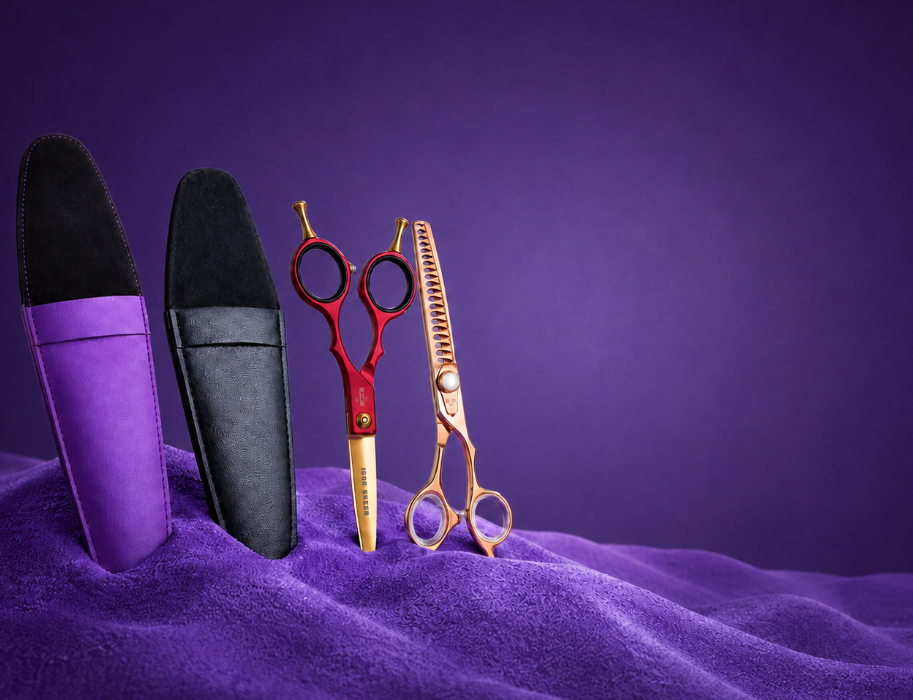






Selecting the right dog grooming scissors size is one of the most important decisions a groomer can make. The correct length doesn’t just improve the finish of your grooms, it also affects your speed, control, comfort and safety for both you and the dog.
With so many options available, it’s easy to feel unsure which blade length to choose. This guide breaks down how to pick the best size dog grooming scissors for different breeds, coat types and grooming styles, and how to make sure they feel comfortable in your hand.
If you’re trying to decide between straight, curved or thinning scissors, we’ve got a separate, detailed explanation on scissor types, and this will be focused on size and fit.
Why Scissor Size Matters in Dog Grooming
The length of your grooming scissors directly affects:
- Control – shorter blades are easier to control in tight or sensitive areas.
- Coverage & speed – longer blades cover more coat with each stroke.
- Finish quality – the right length helps create smoother, more even lines.
- Fatigue – heavier, longer scissors can tire your hand and wrist faster.
Typical dog grooming scissor lengths include:
-
6.5″ – 7″: Best for small breeds, detailed work and sensitive areas such as feet, faces and hygiene areas.
-
7.5″ – 8″: A versatile “everyday” size for many medium to large breeds, balancing control and coverage.
-
8.5″ and above: Preferred by many experienced professionals for large dogs and for achieving a very even finish quickly on big coat areas.
Tip: If you’re new to dog grooming, starting around 7.0″- 7.5″ is often a comfortable middle ground before moving into longer blades.
You can explore all lengths and styles in our full dog grooming Scissors Collection.
Types of Dog Grooming Scissors (From a Size Perspective)
There are several different types of scissors – straight, curved, thinning, chunkers and blenders. The in-depth “what they do and when to use them” is covered in your “Straight vs. Curved vs. Thinning Scissors: Which Type Do You Need?” guide.
Here, we’ll mention them only in terms of how size affects their use.
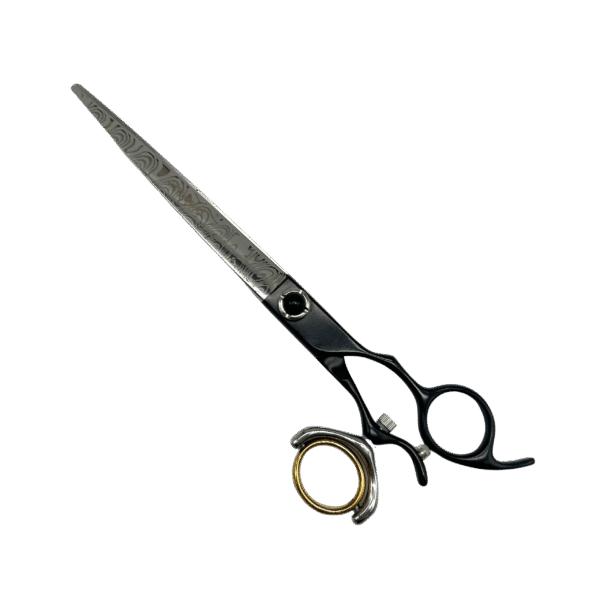
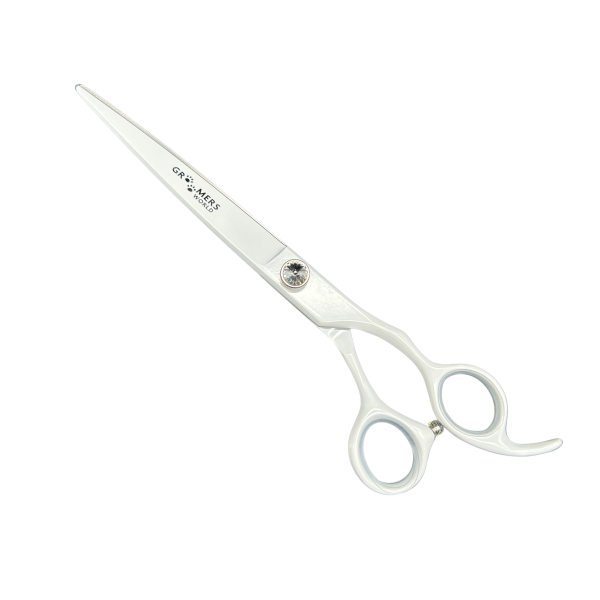
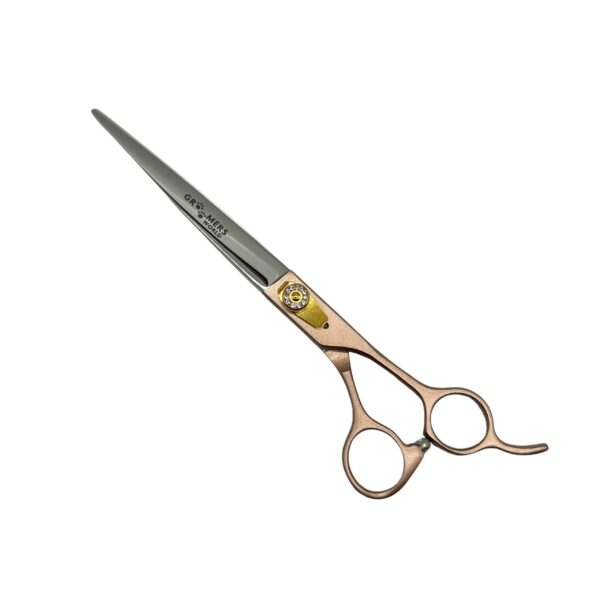
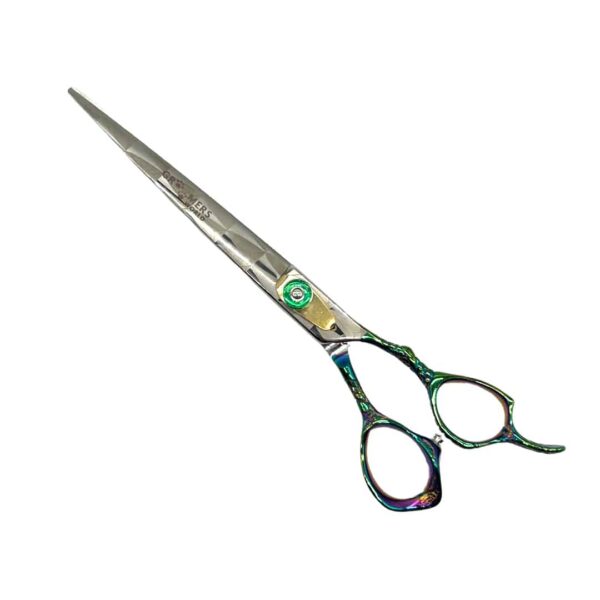
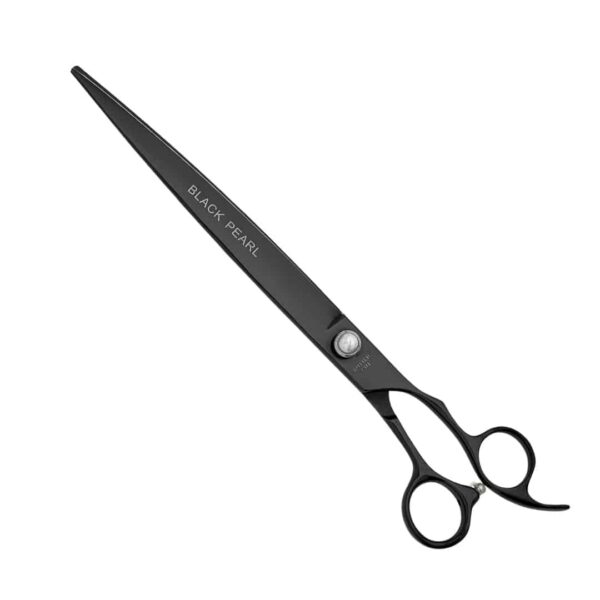
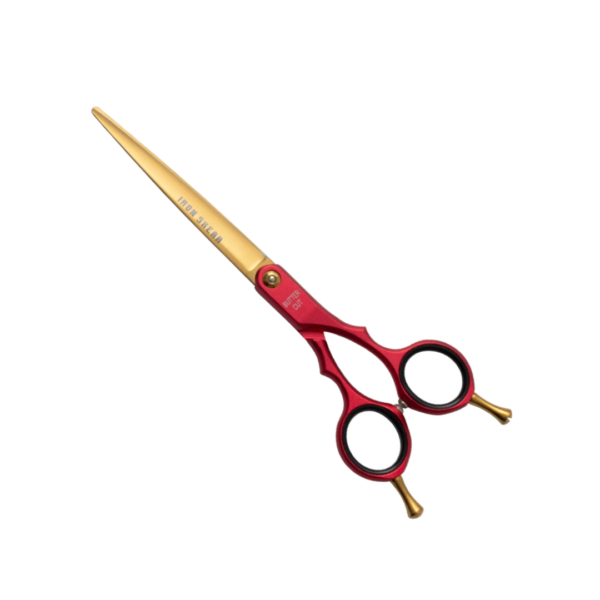
Straight Scissors
Straight scissors are the backbone of most grooming kits and are typically the first pair groomers invest in.
Best sizes for straight scissors:
- 5.5″ – 6.5″: Very detailed work, toy breeds, faces, ears and paws.
- 7″ – 7.5″: General body grooming on small to medium dogs.
- 8″+: Ideal for large breeds and for groomers who prefer speed and long, sweeping lines.
Use smaller straight scissors when you need precision and visibility in small areas; use longer blades when you want smooth, straight lines along the body or legs.
Groomers should be cautious when using straight scissors on curved surfaces such as the feet or face, as the blades can leave harsh, angular edges if not handled carefully.
Explore our full range of straight scissors for everyday trimming and precision work.






Curved Scissors
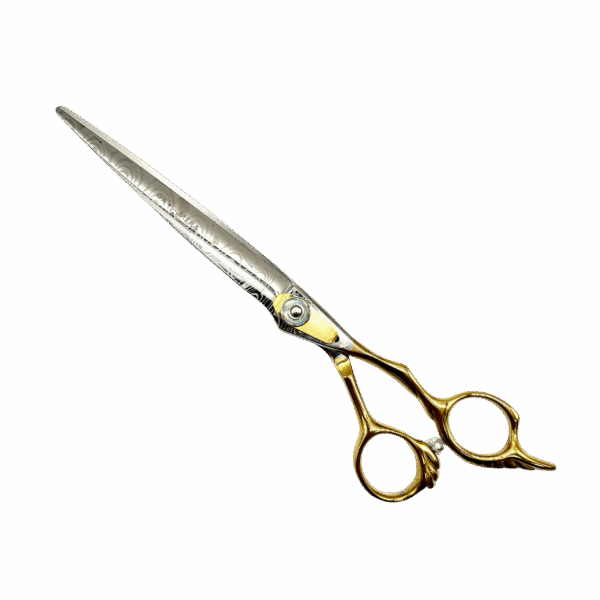
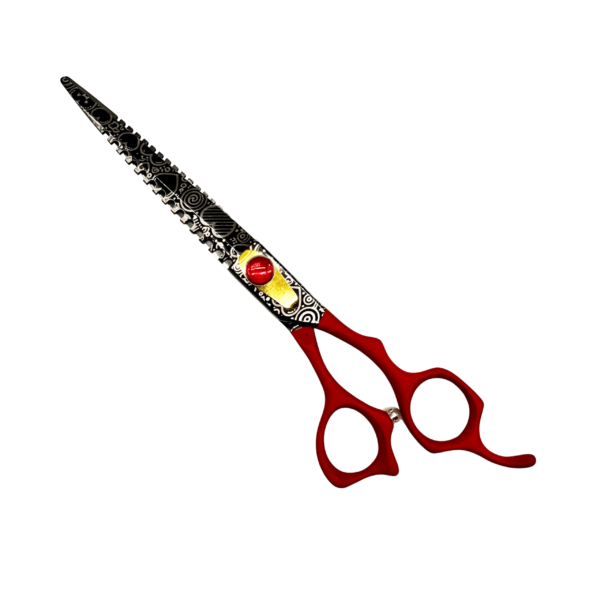
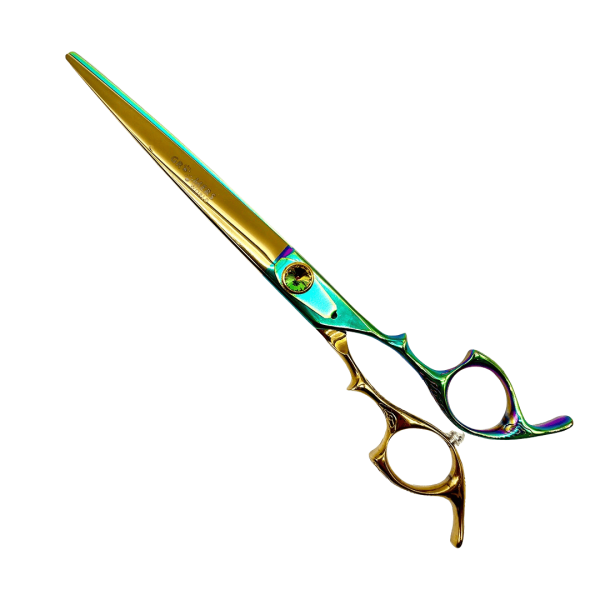
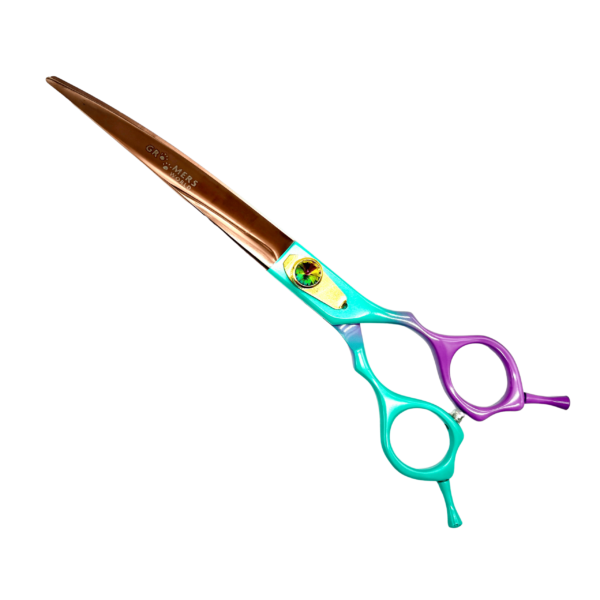
Curved scissors follow the natural contours of the dog’s body and are popular for round shapes and soft finishes.
Best sizes for curved scissors:
- 6.5″ – 7″: Good for small round faces and feet.
- 7.5″ – 8″: Great for medium and larger breeds, shaping chests, rumps and heads.
- Extreme curves in longer lengths – for groomers who do lots of scissor-heavy, rounded styles (e.g. doodles, Poodles, Bichons).
If you mainly groom small companion breeds, shorter curved scissors give you control. If you’re working on Poodles, Cockapoos and Bichons all day, you’ll likely prefer 7.5″- 8″ curved for faster, more consistent curves.
Shop our selection of curved scissors designed to shape and sculpt with ease

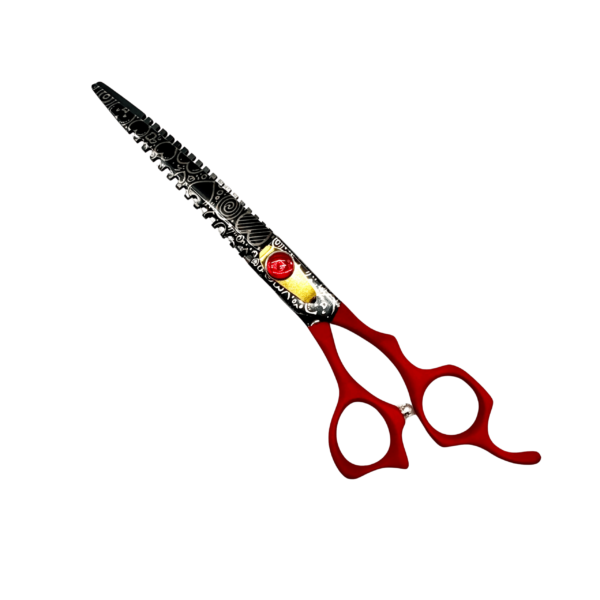
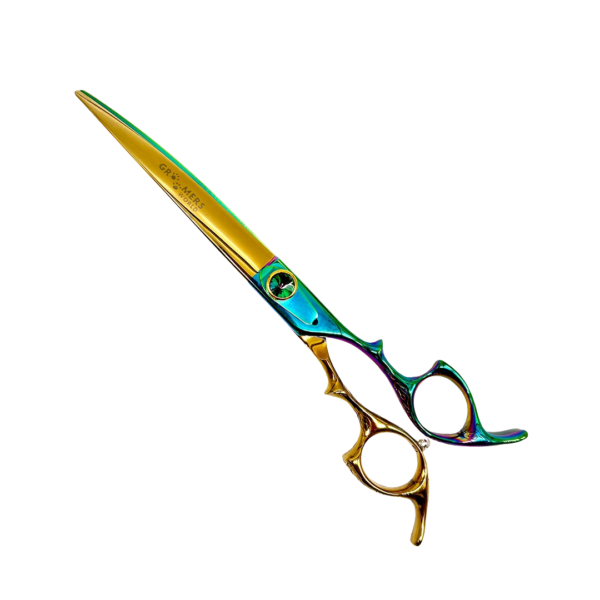

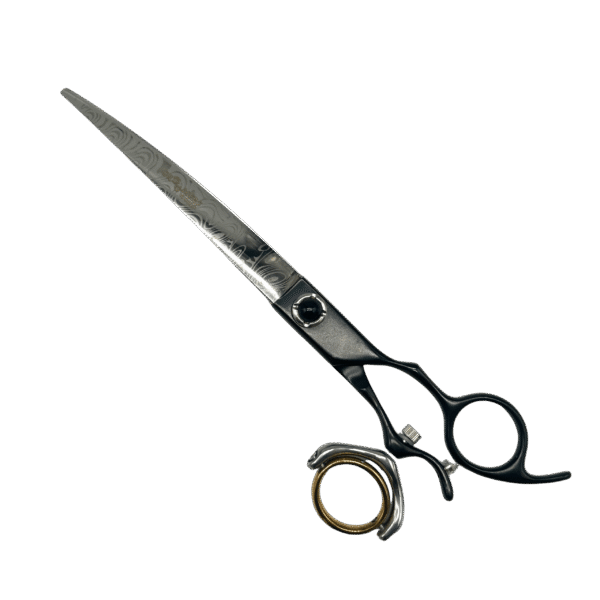
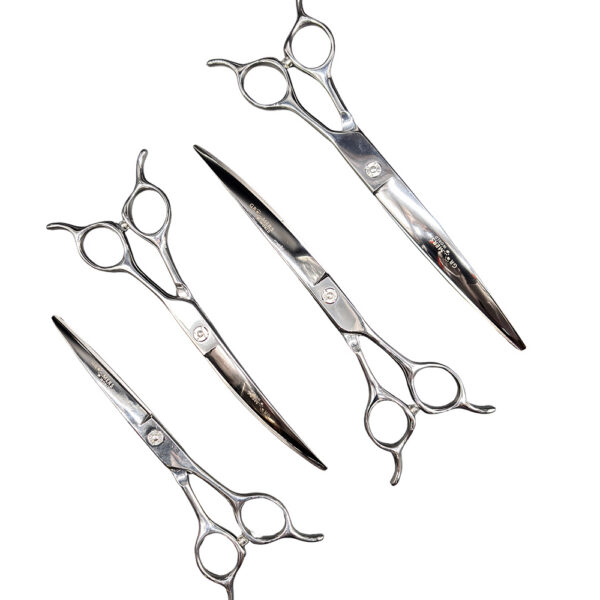
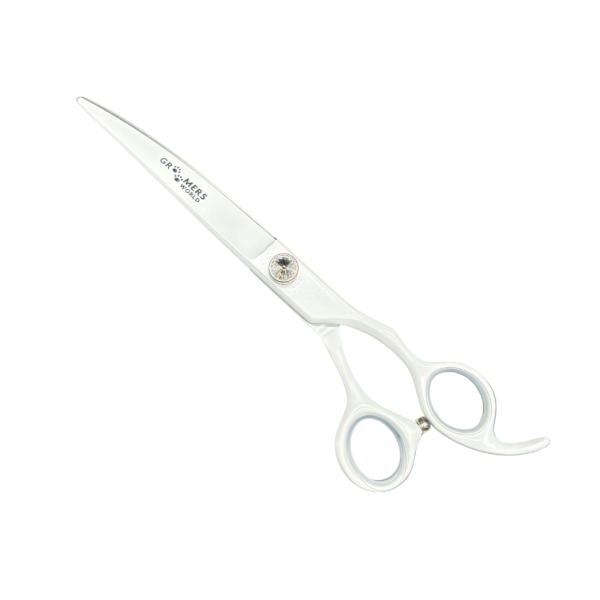
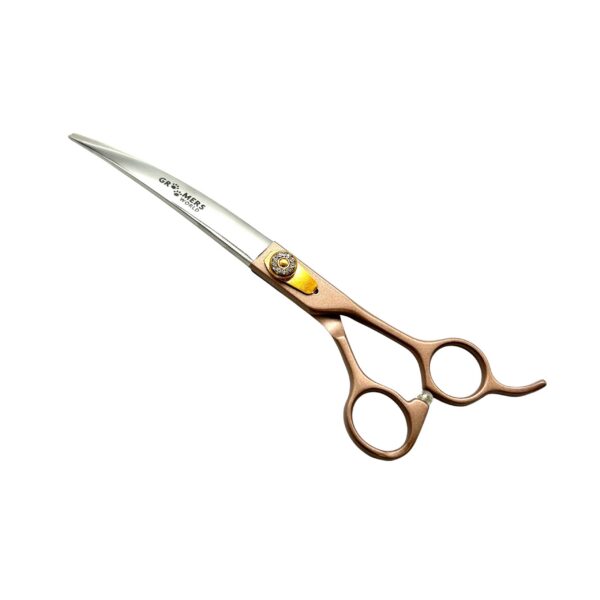
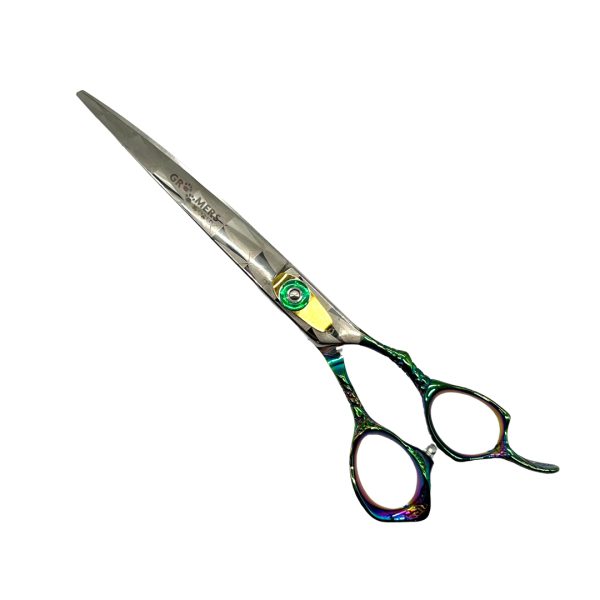
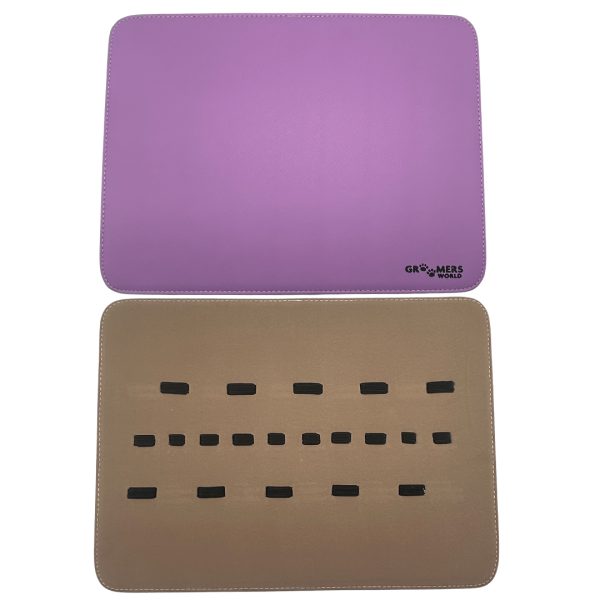

Extreme Curved – Teddy Bear Asian Fusion Set
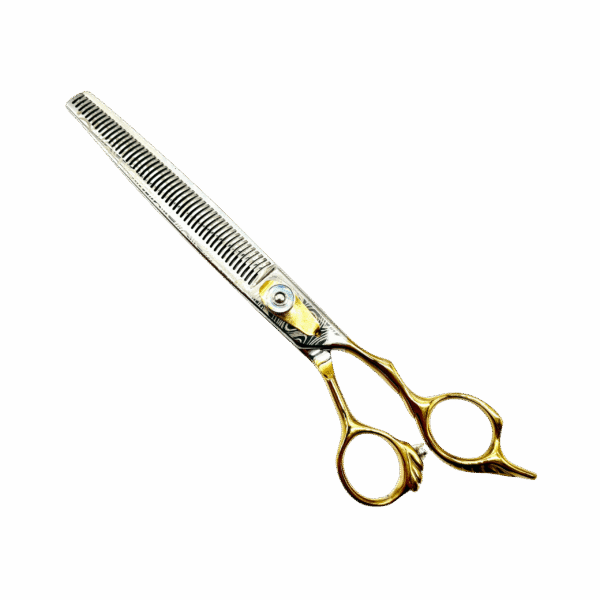
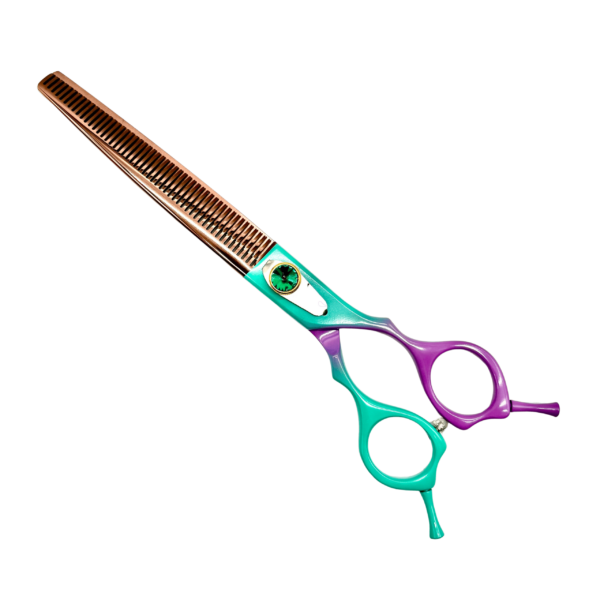
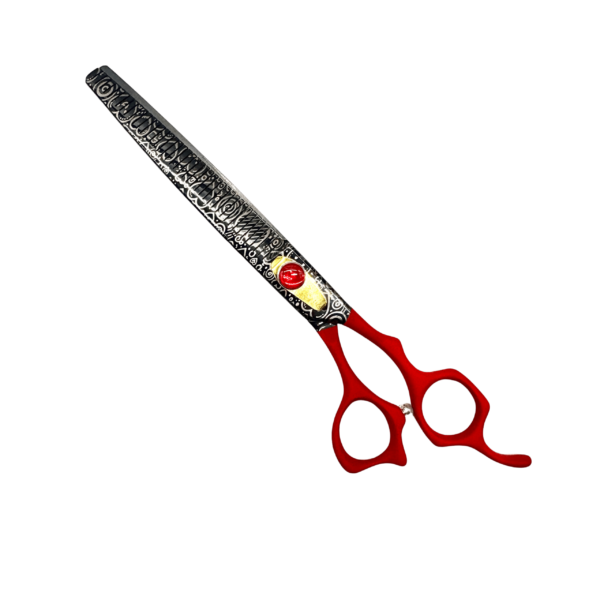
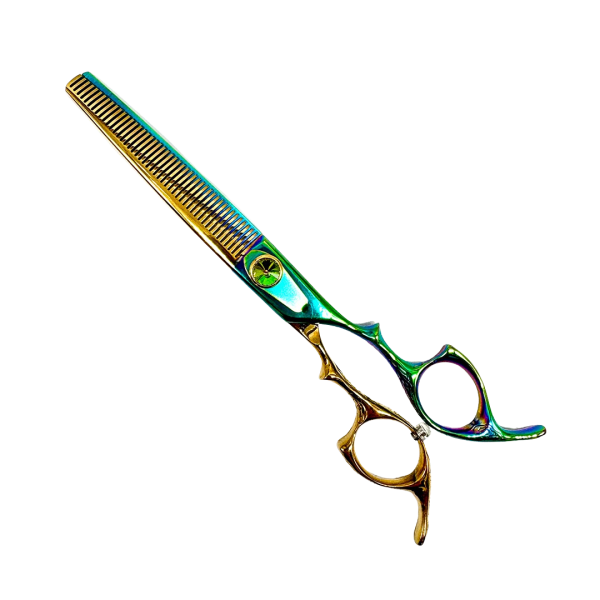
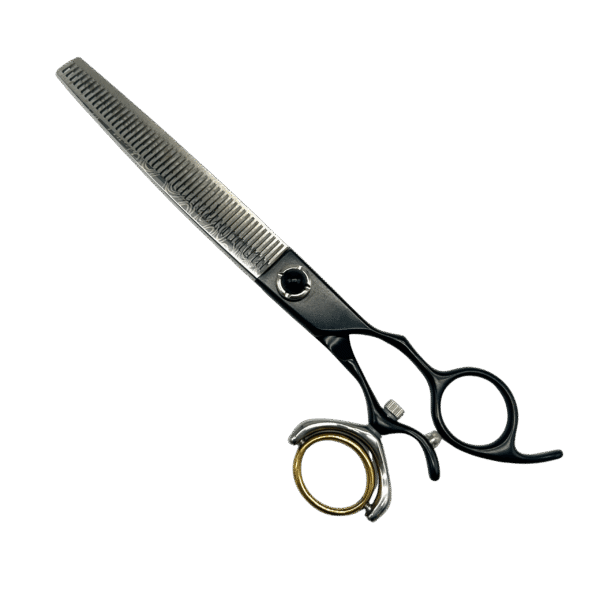
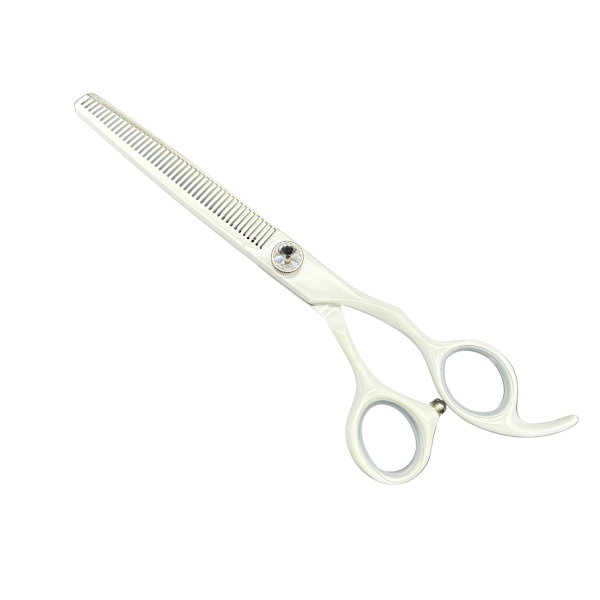
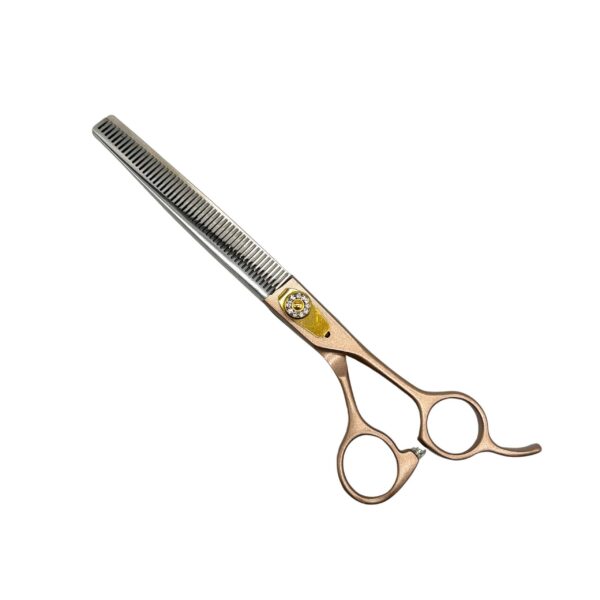
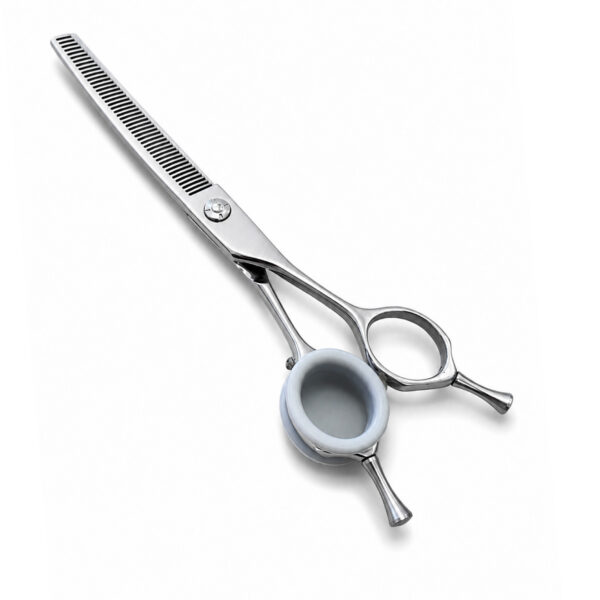
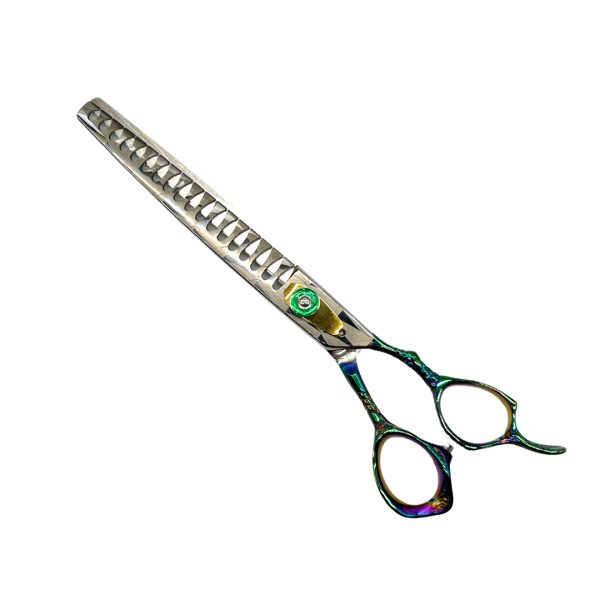
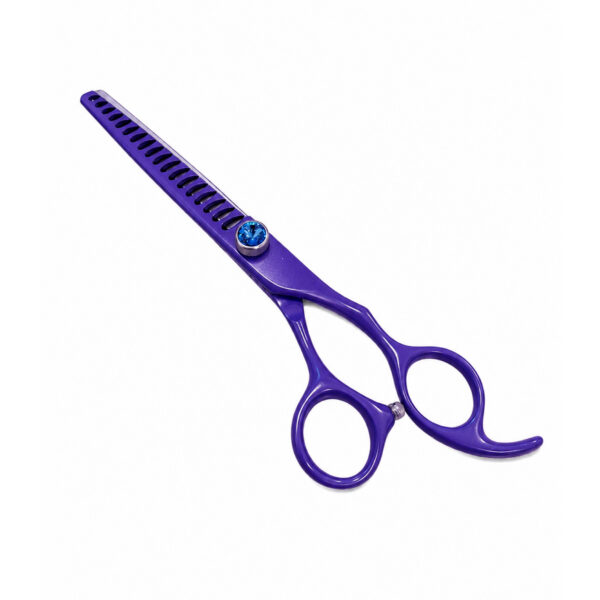
Thinning Scissors
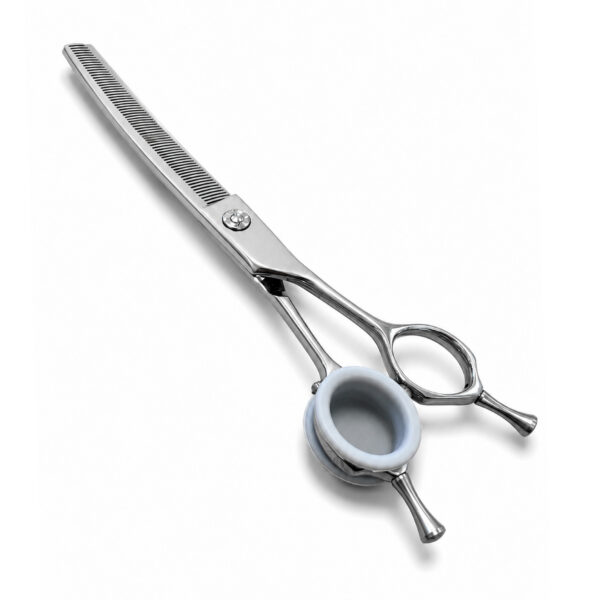
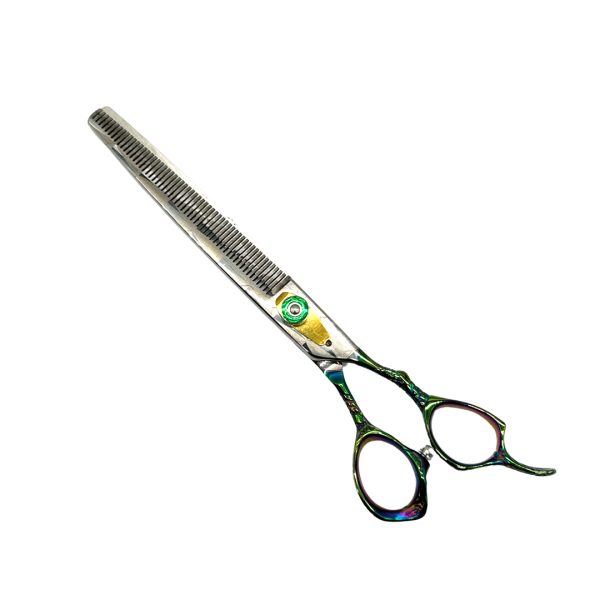
Thinning scissors remove only part of the hair with each cut, making them perfect for softening and blending.
Typical thinning scissor sizes:
- 6.0″ – 6.5″: Best for faces, ears and fine detail blending.
- 7″+: Ideal for blending larger areas such as shoulders, skirts and transitions between clipper and scissor work.
For most groomers, a 7″ thinner is a versatile choice that works on both small and large breeds. If your work is very face and head-focused, adding a shorter, finer thinner can help with delicate blending.
Discover professional thinning scissors to blend, reduce bulk, and create natural finishes.


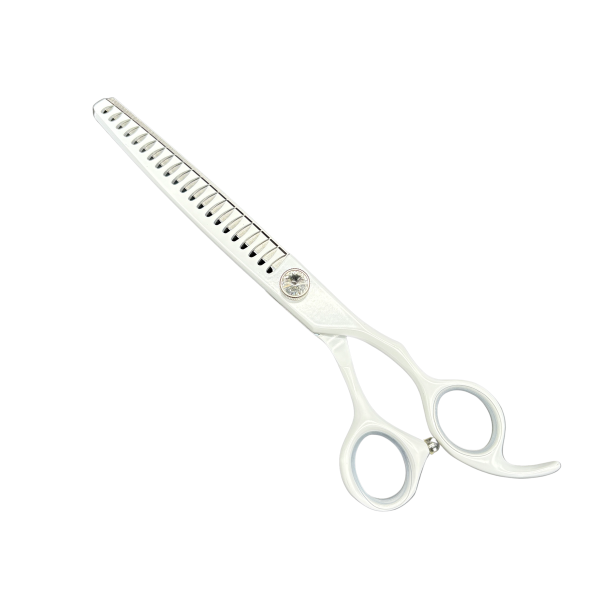
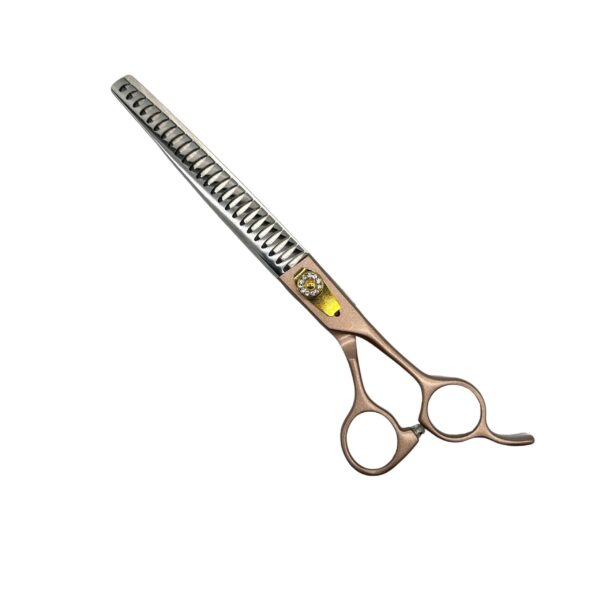
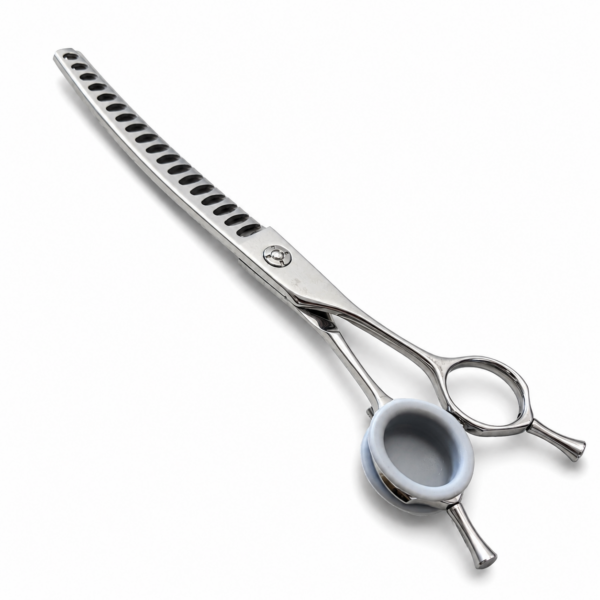
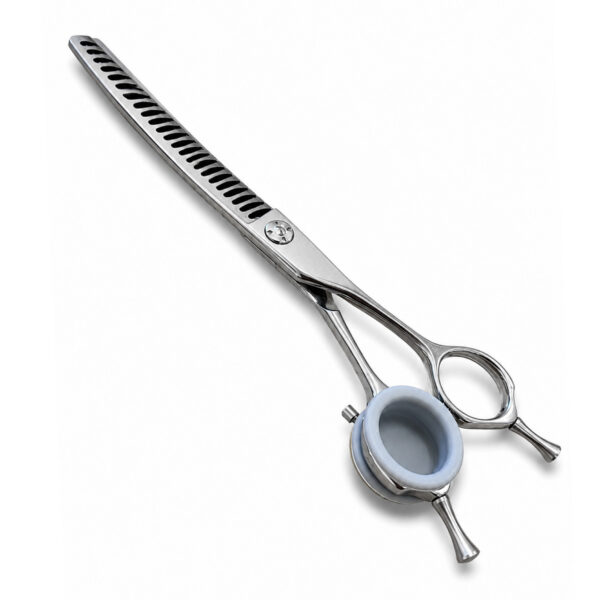
Chunker & Blender Scissors
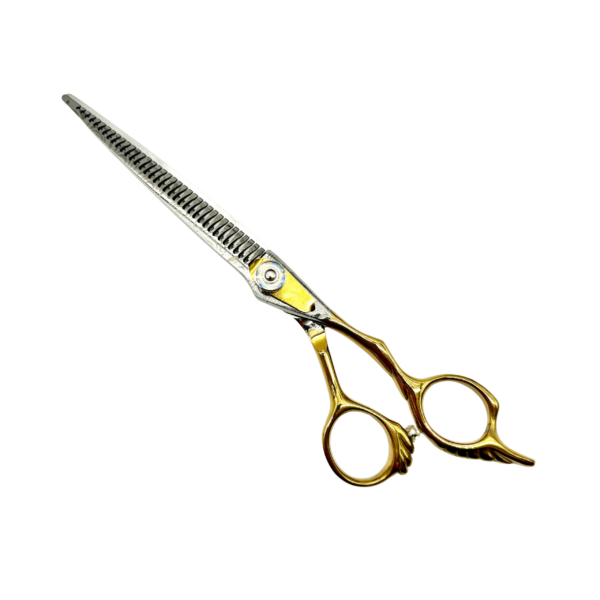
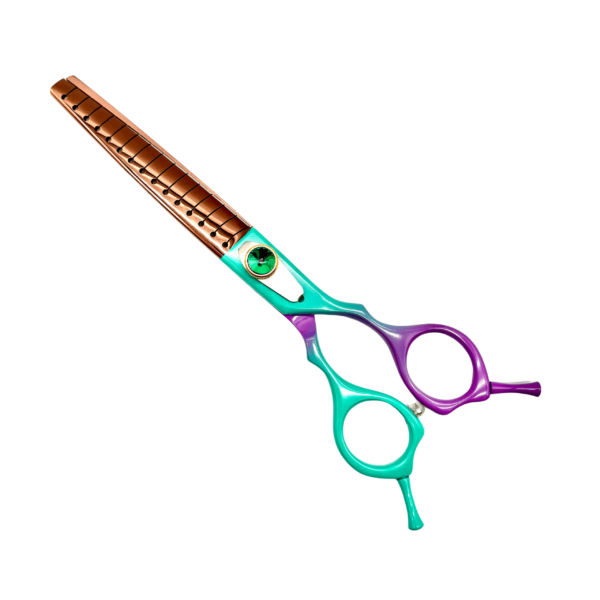
Chunkers and blenders remove more bulk in fewer cuts and are often used on curly and woolly coats.
From a size point of view:
- 6.0″ – 6.5″ chunkers/blenders: Better for small breeds, heads and compact areas.
- 7″ – 7.5″:A popular “all-rounder” for bodywork on Cockapoos, Doodles and other heavy coats.
- Curved chunkers in similar lengths – combine curve and bulk removal for sculpted, modern pet trims.
If you regularly groom large, dense coats, a 7″+ chunker will speed up your work. For mixed-breed pets and smaller dogs, 6.5″- 7″ usually provides enough reach without feeling unwieldy.
Browse our chunker blender scissors for bulk removal and seamless blending.
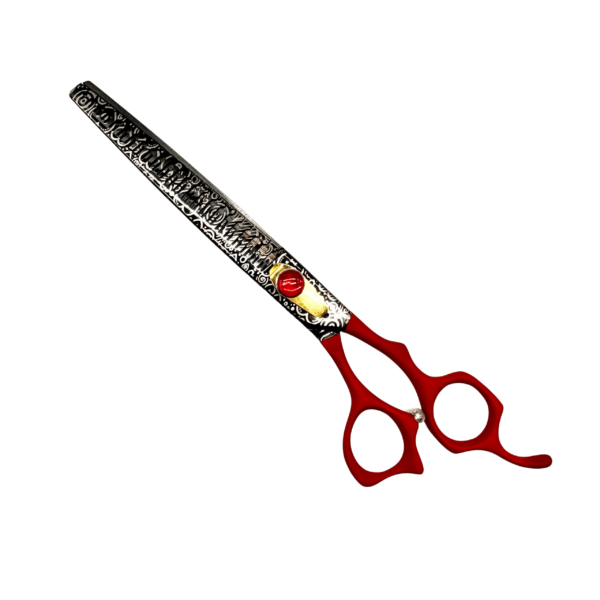
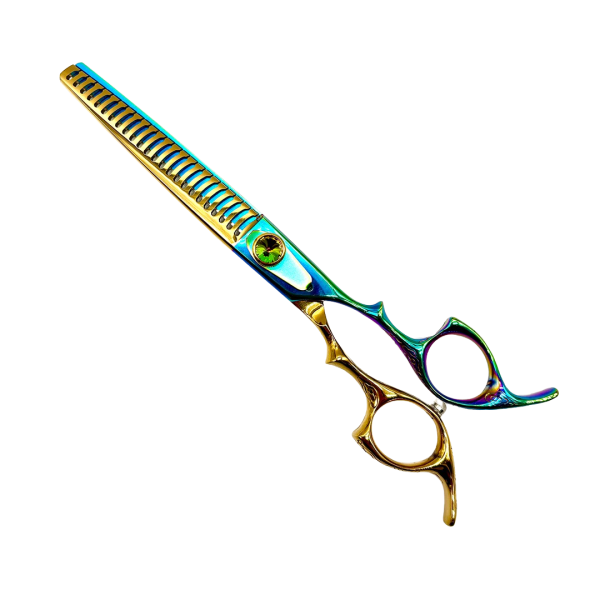
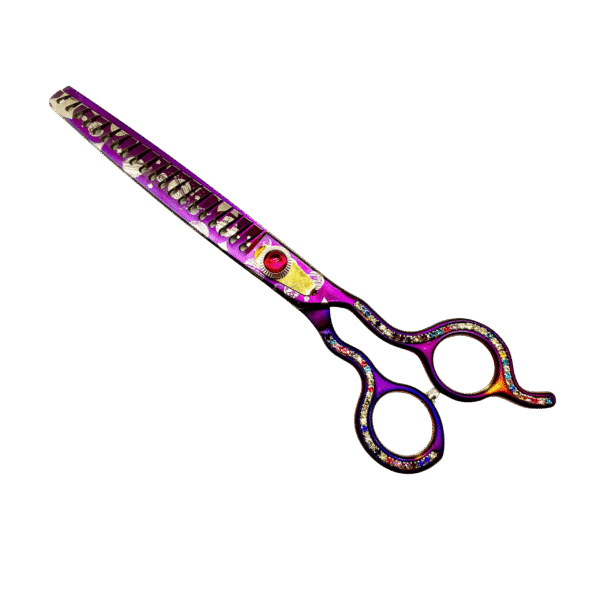
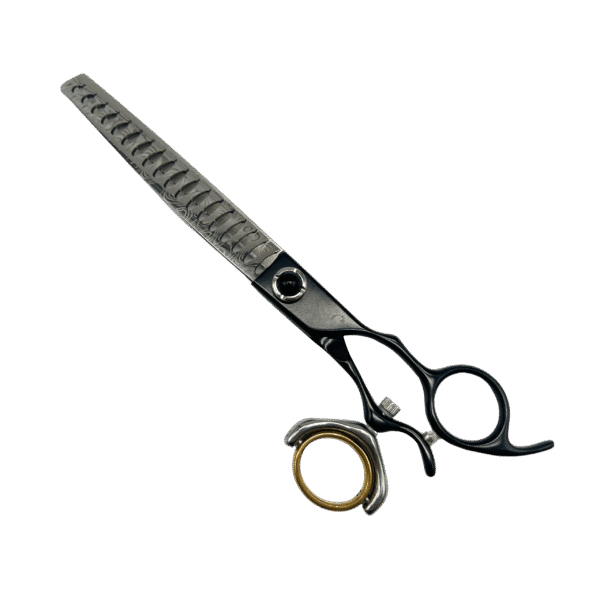
How to Choose Dog Grooming Scissors by Breed & Coat Type
Here are some practical examples to guide your decision:
- Small breeds (Yorkshire Terriers, Shih Tzus): Opt for 6.5” – 7” straight or curved scissors for precision.
- Medium breeds (Cockapoos, Schnauzers): 7.5” scissors work well for body grooming, while thinning scissors help manage thick coats.
- Large breeds (Golden Retrievers, Standard Poodles): 8”+ scissors allow for speed and smoother finishes across large coat areas. Chunkers are also useful for managing heavy coats.
For professional quality, check out our Groomers World Scissors or premium Kenchii Scissors.
Left-Handed Groomers: Choosing the Right Fit
If you’re left-handed, it’s essential to choose the best left-handed grooming scissors in the correct size. Using right-handed scissors in your left hand can:
- reduce control and accuracy
- increase hand and wrist strain
- make it harder to see exactly where you’re cutting
Match the length guidelines above to your breeds and techniques, but make sure you’re choosing left-handed scissors designed with the blade and handle alignment reversed.
Ergonomics & Comfort
The best size dog grooming scissors are not just about length, they should also feel comfortable in your hand. Look for:
- Ergonomic grooming scissors with offset handles to reduce wrist strain.
- Lightweight designs that won’t tire your hands during long grooming sessions.
- Finger rests for added stability and comfort.
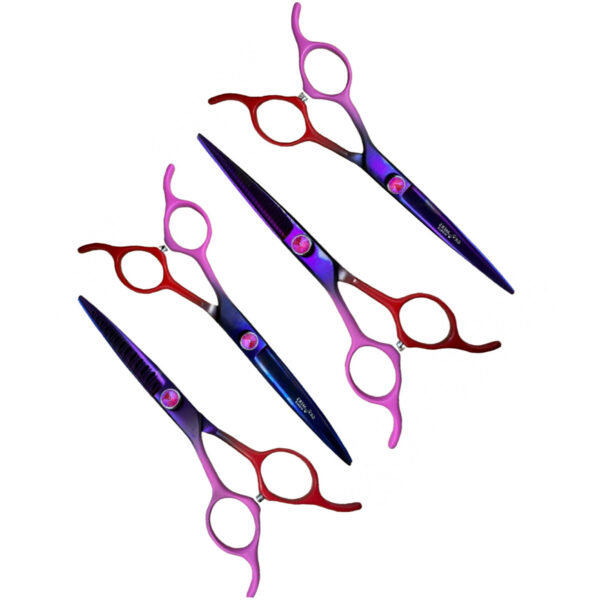
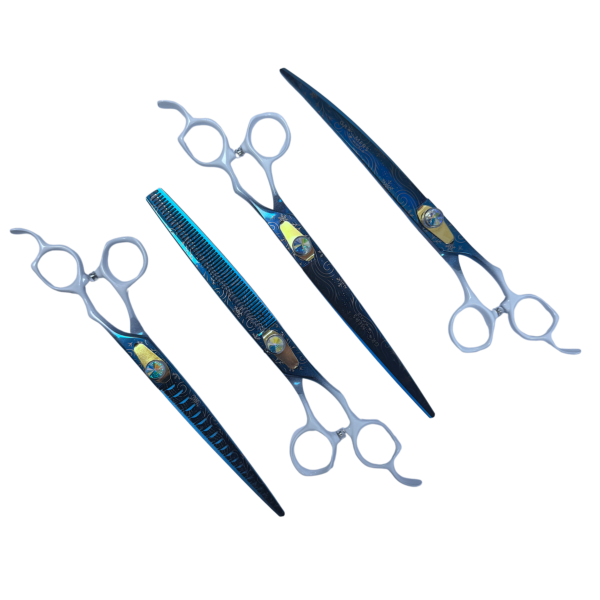
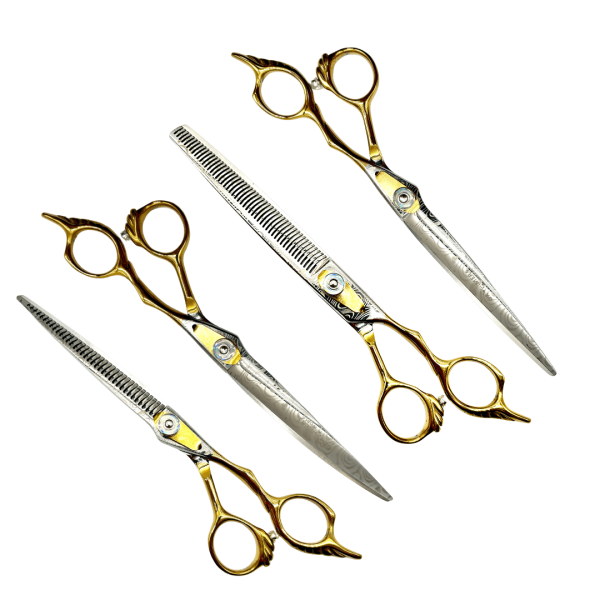
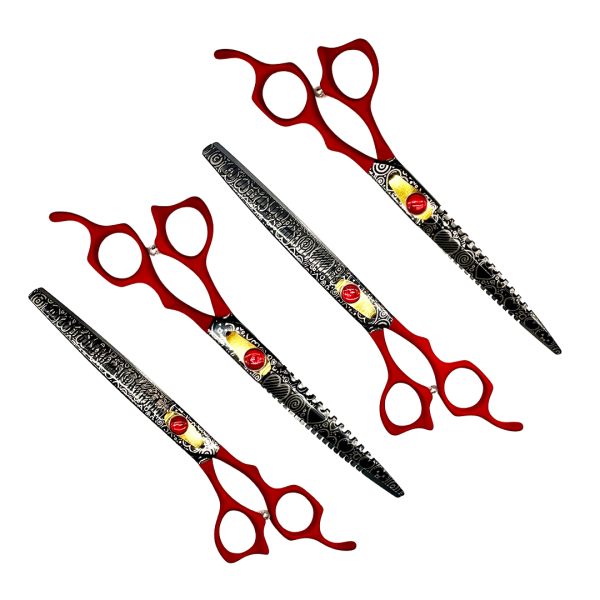
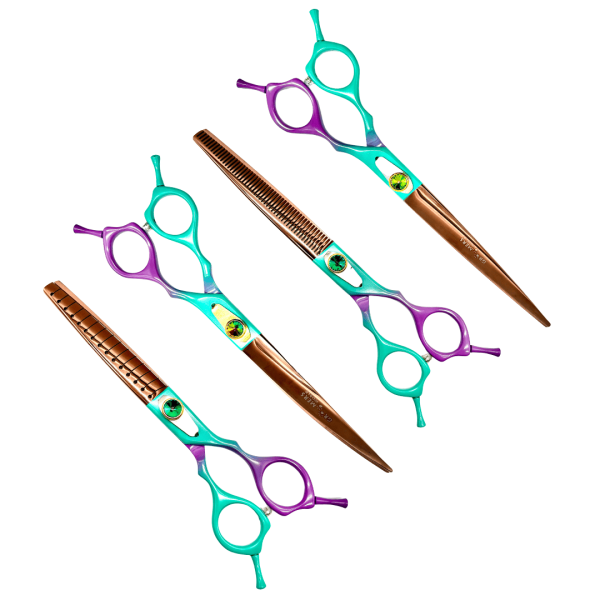
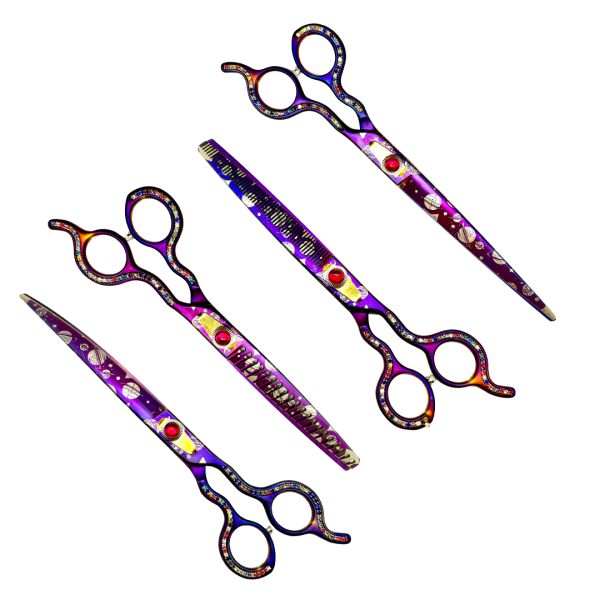
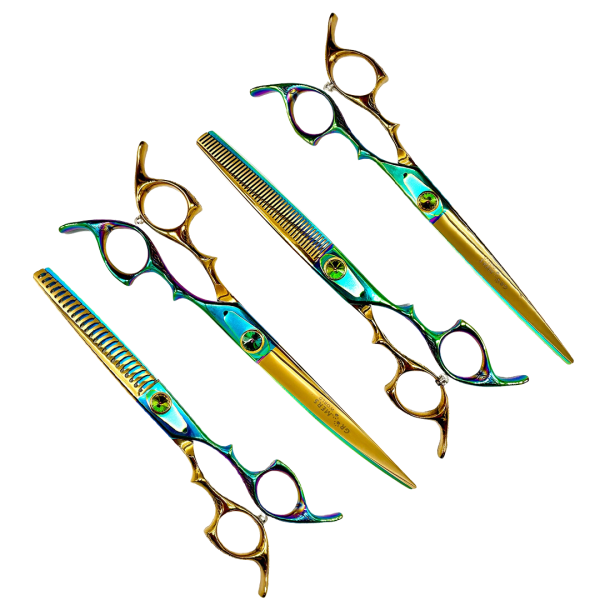
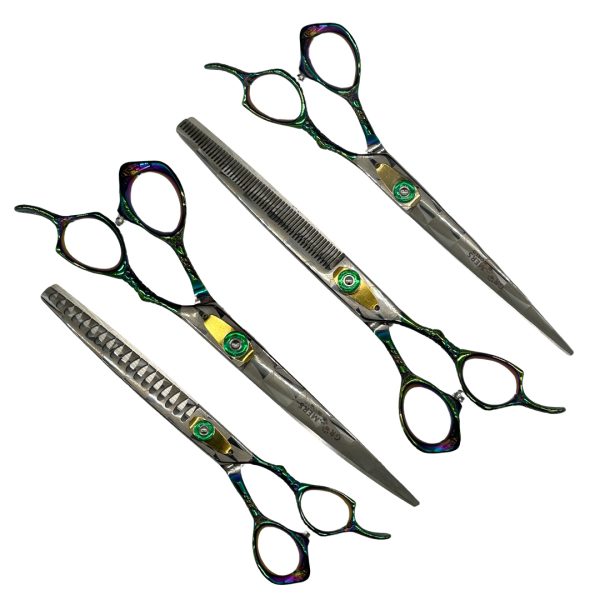
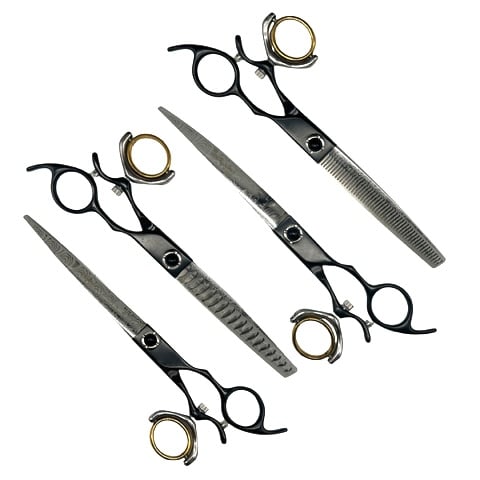
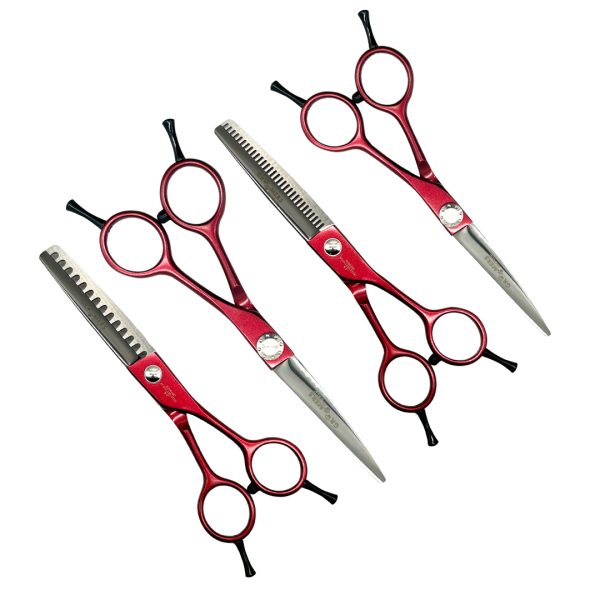
Many professionals keep multiple pairs for different tasks. If you’re starting, consider a scissor set to cover all your needs.
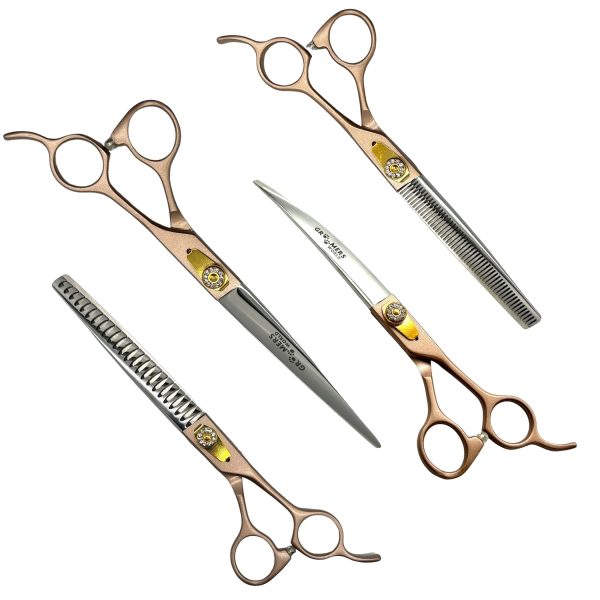
Maintenance & Safety Tips
Once you’ve chosen the right scissors, proper care will keep them performing at their best:
- Clean and dry after every groom.
- Oil the pivot screw regularly.
- Store in a protective case to avoid damage.
- Sharpen professionally when needed, don’t attempt DIY sharpening.
- Always cut carefully around sensitive areas like ears, eyes, and paws.
Final Thoughts
Choosing the right dog grooming scissors size depends on your breed focus, grooming style, and comfort. Whether you need precision with short blades or speed with longer scissors, investing in high-quality, ergonomic tools will make your grooming more efficient and enjoyable.
Dog Grooming Scissors Size – FAQ
What size dog grooming scissors do I need?
The size depends on your dog’s breed, coat type, and the area you’re grooming. Smaller scissors (6.5”- 7”) are best for detailed work on faces and paws, while longer blades (7.5”- 8”+) are ideal for larger breeds and body grooming.
What length is a 4 blade in dog grooming?
A 4 blade typically leaves around 9.5 mm (3/8”) of coat. It’s commonly used for a short but not shaved look, especially on breeds that require manageable coat lengths without exposing the skin.
What is the difference between hairdresser scissors and dog grooming scissors?
Hairdresser scissors are designed for human hair, which is finer and less dense. Dog grooming scissors are stronger, with sharper blades and ergonomic handles to handle thicker coats, different textures, and longer grooming sessions safely.
Why do dog groomers use curved scissors?
Curved scissors allow groomers to follow the natural shape of a dog’s body. They are especially useful for rounding heads, paws, and muzzles, giving a softer and more balanced finish compared to straight scissors.
How often should dog grooming scissors be sharpened?
With regular use, professional grooming scissors should be sharpened every 3–6 months. However, the frequency depends on the coat types groomed and how well the scissors are maintained (cleaning, oiling, and proper storage).
Can you use human hair scissors on dogs?
It’s not recommended. Human hair scissors aren’t strong enough for dog coats and may cause pulling, uneven cuts, or damage to the blades. Investing in proper dog grooming scissors ensures safety and better results.
What brand of scissors do professional dog groomers use?
Professional groomers often use trusted brands like Groomers World Scissors and Kenchii Scissors for their durability, precision, and ergonomic designs.
How do I know what size scissors I need?
Choose scissors based on your most common tasks: shorter blades for precision and safety in small areas, longer blades for efficiency on larger breeds. Many professionals keep multiple sizes to switch between jobs.
 Grooming Bundles
 Salon Equipment
 Dryers & Blasters
 Tables
 Clippers & Trimmers
 Blades & Attachments
 Baths
Baths Spare Parts
 Scissors
 Scissor Brands
 Groomers World Scissors
 Geib Scissors
 Kenchii Scissors
 Roseline
 Straight
 Curved
 Thinner
 Scissor Sets
 Blender & Chunker
 Left Handed
 Shampoo, Spa & Perfume
 All Shampoo
 Wahl Shampoo
 Tropiclean Shampoo
 Mud Bath & Spa
 Fragrance
 Health, Hygiene & Liquids
 Tools
Tools Hand Stripping
 Grooming Aids
 Rakes, Nail Clippers & tools
 Brushes & Combs
 Brushes
 Combs
Combs Extras
 Bandanas & Bows
 Retail
 Leads, Collars & Jackets
 Storage & Stationary
 Offers
 On Sale
 Gift Cards
 Equine
 Equine Clippers
 Equine Blades
 Equine Health, Hygiene & Liquids
 Aesculap
 Aeolus
 Andis
Andis Barbicide
 Bymilo
 Groomers Helper
 Groomers World PRO
 Groomers World
 Groomers World Classic
 Hatchwells
 Heiniger
 Joyzze
 Leucillin
 Oster
Oster Roseline
 Tropiclean
 Wahl
Wahl