





Dog grooming blade numbers can be confusing, especially when a higher blade number actually means a shorter cut.
The clipper itself provides the power, but the blade controls the cutting length, how the coat feeds through the teeth and the type of finish you create. Two groomers can use the same clipper and achieve very different results simply by changing the blade. The blade is only one part of the setup. Our complete guide to dog grooming clippers explains how to choose the right machine for different coat types and salon needs.
In this guide, we explain how dog clipper blade sizes work, what common blade numbers mean, the difference between finish-cut and skip-tooth blades, when wide blades make sense and how attachment combs give you more length options.
You can also browse our full range of dog grooming blades and attachments, including standard A5 blades, wide blades, replacement blades and comb attachments.
What Do Dog Clipper Blade Numbers Mean?
Dog clipper blade numbers generally work in reverse:
The higher the blade number, the shorter the coat it leaves behind.
For example:
- A #30 blade cuts much shorter than a #10 blade.
- A #10 blade cuts shorter than a #7F blade.
- A #7F blade cuts shorter than a #5F blade.
This can feel confusing at first because most people expect a higher number to mean a longer cut.
The easiest way to compare blades is to check the stated cutting length in millimetres rather than relying on the blade number alone. Exact lengths can vary slightly between ranges and manufacturers, so always check the product specification before buying.
Dog Clipper Blade Size Chart
The table below gives a practical overview of common detachable dog grooming blade sizes.
| Blade size | Approximate cutting length | Common grooming uses |
|---|---|---|
| #40 | 0.25 mm | Very close specialist work and veterinary preparation |
| #30 | 0.5 mm | Precision work and use beneath compatible attachment combs |
| #15 | 1.2 mm | Feet, faces and close detail work |
| #10 | 1.5–1.6 mm | Paw pads, sanitary areas, faces and close trimming |
| #9 | Around 2 mm | Short trims and some sporting patterns |
| #8½ | Around 2.8 mm | Short body work where slightly more coat is required |
| #7F / #7FC | 3.2 mm | Short body clips and practical salon trims |
| #5F / #5FC | 6.3 mm | Medium-short body finishes |
| #4F / #4FC | 9.5 mm | Longer body clips and fuller pet trims |
| #3¾F / #3¾FC | Around 13 mm | Longer, plush finishes on prepared coats |
These are nominal industry lengths, not a guarantee of the exact finished coat length.
The result can change depending on:
- Whether you clip with or against coat growth
- Coat texture and density
- How well the coat has been washed, dried and brushed
- The pressure and angle used
- Blade sharpness
- The individual blade range
A blade chart is a useful starting point, but coat preparation and technique still matter.
What is an A5 Dog Grooming Blade?
An A5 blade is a detachable blade format used on many professional dog grooming clippers.
The main advantage is flexibility. Instead of replacing the entire cutting head or changing clippers, you can remove one blade and fit another size within seconds.
A5 systems are popular in professional grooming because they allow one compatible clipper to handle several jobs, including:
- Close detail work
- Full-body clipping
- Longer body finishes
- Attachment-comb work
Although many professional clippers use the A5 fitting, always check the product description to confirm that the blade is compatible with your clipper model.
Your blade system also needs to suit the way you work. Our corded vs cordless dog clippers guide explains the differences between salon-based and portable clipper setups.
Standard A5 Blades vs Wide A5 Blades
Standard A5 blades are the everyday choice for general salon work. Wide blades use a broader cutting surface, allowing the groomer to cover more coat with each pass.
| Feature | Standard A5 blade | A5 wide blade |
| Cutting area | Standard width | Wider cutting surface |
| Best for | General clipping and smaller areas | Large dogs and broad body areas |
| Manoeuvrability | Easier around tighter sections | Better on larger, flatter areas |
| Speed | Standard coverage | Can reduce clipping time |
| Comb compatibility | Standard A5 combs | Wide-blade combs required |
Wide blades can be particularly useful when working on larger dogs or completing repeated full-body clips in a busy salon.
They are not automatically better for every groom. A standard blade often gives more control around legs, curves and smaller body areas.
Browse the available dog grooming A5 wide blades to compare sizes and brands.

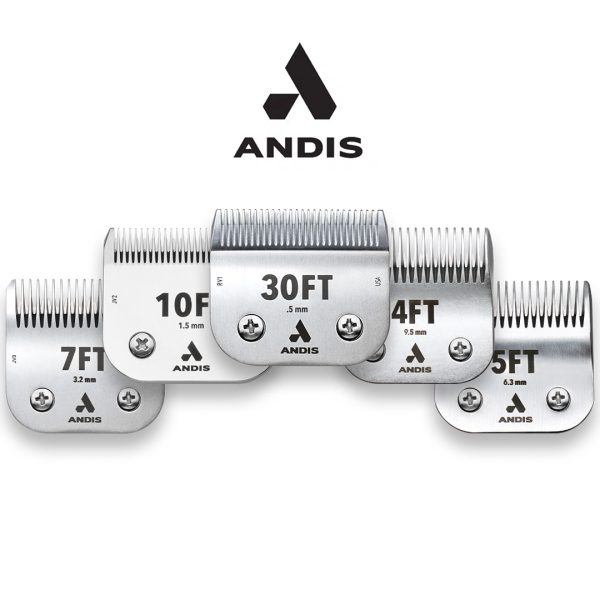
Finish-Cut vs Skip-Tooth Blades
Two blades with the same number can perform differently depending on the tooth pattern.
Finish-cut blades
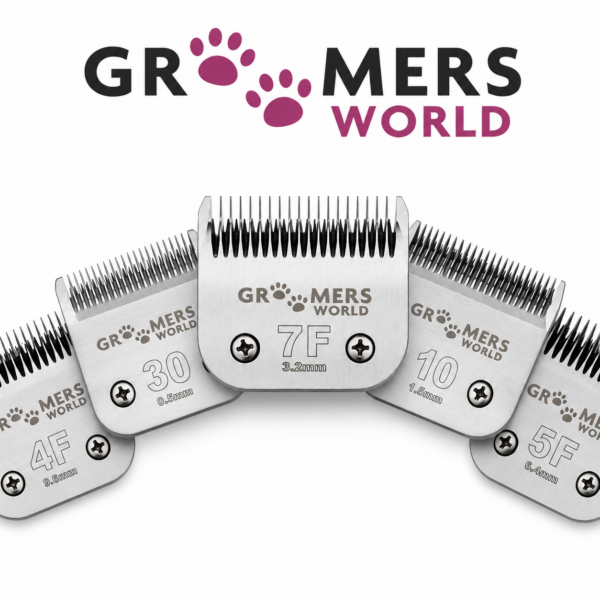
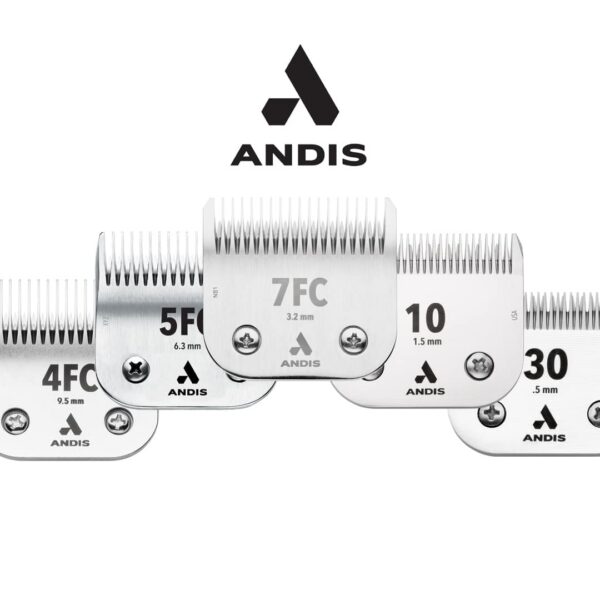
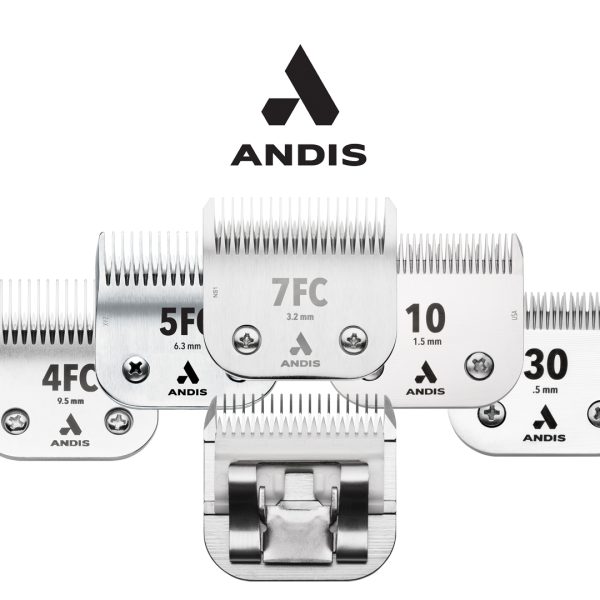
Finish-cut blades are usually marked F or FC. They have an even tooth pattern and are designed to leave a smoother result.
Common examples include #7F, #5F, #4F and #3¾F.
Skip-tooth blades
Skip-tooth blades have wider spaces between some teeth. This can help feed coarse or dense coat into the blade, but the more open pattern requires careful handling around folds, armpits, groin areas, ears and other delicate skin.
For most routine salon body work, a finish-cut blade is the more straightforward option.
Choosing a Blade by Grooming Job
New groomers should first make sure they are using a suitable clipper and blade system. Our guide to the best dog grooming clippers for beginners explains the key features that make a clipper easier to control.
Paw pads and close areas
Close blades such as #10, #15 or #30 may be used for paw pads and detailed work, depending on the dog, the groomer and the required finish.
Sanitary trimming
A #10 blade is a common choice because it gives a close result without being as extreme as higher-number blades.
Full-body clipping
Common body blade choices include:
- #7F for a short practical finish
- #5F for a medium-short finish
- #4F for a longer body finish
- #3¾F for a fuller result on a well-prepared coat
Matted coats
Do not force a longer blade or attachment comb through tight matting. Severe matting should be handled by an experienced professional groomer, with veterinary advice where there are welfare or skin concerns.
Choosing Blades by Coat Type
Curly and wool coats
Finish-cut blades are useful for shorter styles, while attachment combs help retain more length. Proper washing, drying and straightening are essential.
Long and silky coats
Fine coats can show clipper marks easily, so sharp blades and controlled technique matter.
Thick and dense coats
Keep the blade clean, rotate blades before they become hot and consider a wide blade for suitable larger body areas.
Double coats
Double coats are not normally clipped as part of routine coat maintenance. Bathing, drying, and deshedding may be more appropriate unless clipping is required for medical, welfare, or individual grooming reasons.
Blade Numbers vs Attachment Combs
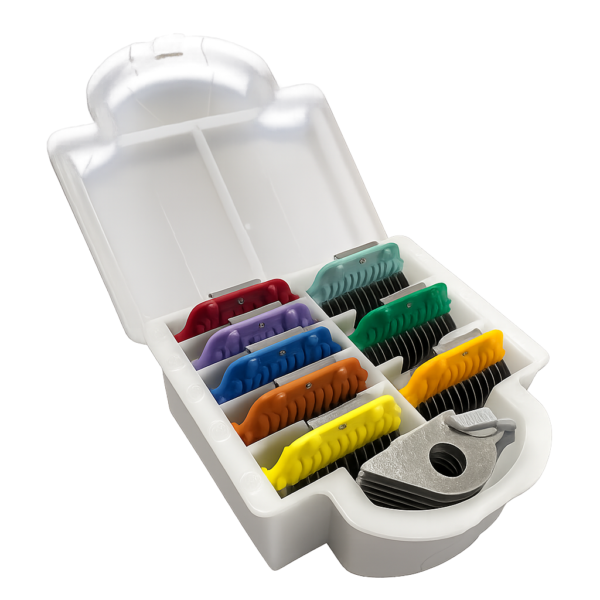
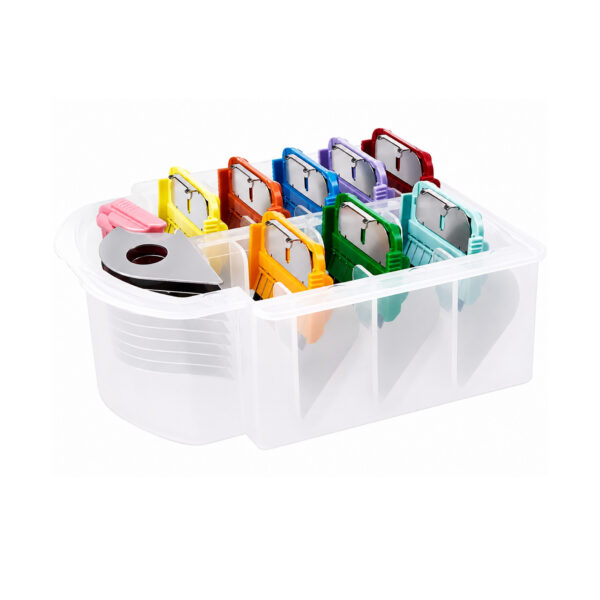
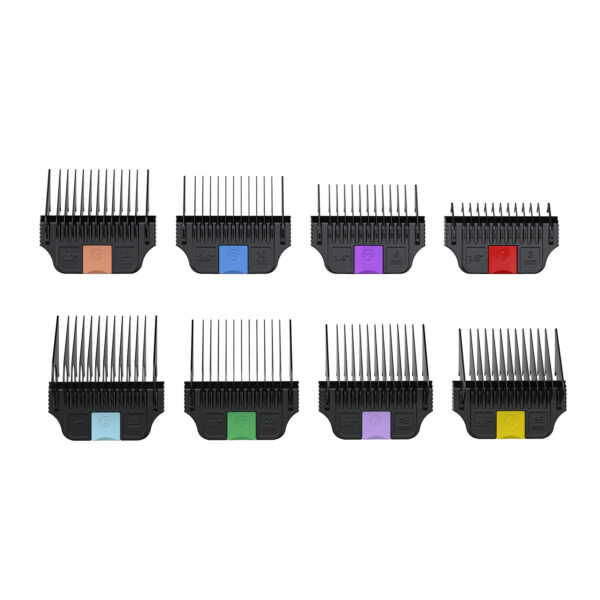
A blade cuts the coat directly. An attachment comb fits over a compatible blade and leaves more length behind.
Attachment combs are useful for:
- Longer body finishes
- Keeping more coat
- Creating an even length
- Expanding the range of cuts available from one clipper
Many systems fit over compatible #10, #15 or #30 blades, but the correct base blade depends on the manufacturer.
Browse dog grooming clipper attachments in standard and wide formats.


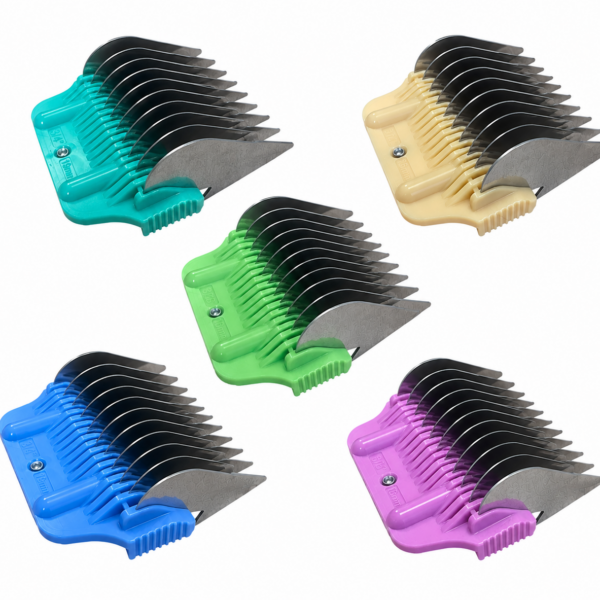
Common Attachment Comb Lengths
| Comb length | Typical finish |
| 3 mm | Short comb finish |
| 6 mm | Practical short body finish |
| 9–10 mm | Medium-short finish |
| 13 mm | Fuller body length |
| 16 mm | Longer styled finish |
| 19 mm | Plush finish |
| 22–25 mm | Longer prepared coat |
An attachment comb should glide through the coat. If it catches or drags, stop and reassess rather than forcing it through.
How to Maintain Dog Grooming Blades
After use:
- Remove the blade according to the clipper instructions.
- Brush away loose coat.
- Clean or disinfect it with a suitable blade-care product.
- Dry it thoroughly.
- Apply clipper oil to the recommended points.
- Store it somewhere clean and dry.
A blade may need sharpening, servicing or replacement if it pulls, cuts unevenly, overheats quickly or has damaged teeth.
If a clean, sharp blade still pulls or cuts unevenly, read our guide to common dog clipper problems to check whether the issue may be with the clipper, drive system or setup.
Choosing the Right Dog Grooming Blade
Before ordering, check:
- Does it fit your clipper?
- What cutting length does it leave?
- Is it finish-cut or skip-tooth?
- Is it standard width or wide?
- Is it suitable for the coat and body area?
- Will your attachment combs fit?
The right blade is the one that fits your clipper, suits the coat and produces the required finish safely and consistently.
Complete your professional grooming setup with our range of dog grooming clippers and trimmers, brushes and combs, dog grooming scissors, and professional dog shampoos and coat-care products.
 Grooming Bundles
 Salon Equipment
 Dryers & Blasters
 Tables
 Clippers & Trimmers
 Blades & Attachments
 Baths
Baths Spare Parts
 Scissors
 Scissor Brands
 Groomers World Scissors
 Geib Scissors
 Kenchii Scissors
 Roseline
 Straight
 Curved
 Thinner
 Scissor Sets
 Blender & Chunker
 Left Handed
 Shampoo, Spa & Perfume
 All Shampoo
 Wahl Shampoo
 Tropiclean Shampoo
 Mud Bath & Spa
 Fragrance
 Health, Hygiene & Liquids
 Tools
Tools Hand Stripping
 Grooming Aids
 Rakes, Nail Clippers & tools
 Brushes & Combs
 Brushes
 Combs
Combs Extras
 Bandanas & Bows
 Retail
 Leads, Collars & Jackets
 Storage & Stationary
 Offers
 On Sale
 Gift Cards
 Equine
 Equine Clippers
 Equine Blades
 Equine Health, Hygiene & Liquids
 Aesculap
 Aeolus
 Andis
Andis Barbicide
 Bymilo
 Groomers Helper
 Groomers World PRO
 Groomers World
 Groomers World Classic
 Hatchwells
 Heiniger
 Joyzze
 Leucillin
 Oster
Oster Roseline
 Tropiclean
 Wahl
Wahl