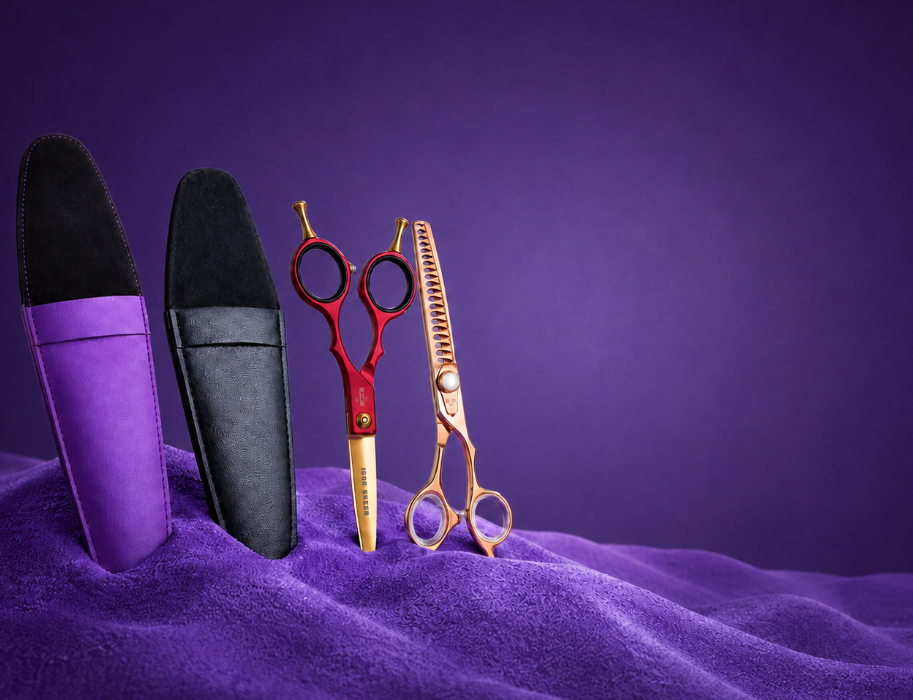






Choosing the right grooming scissors is one of the most important decisions a professional dog groomer or dedicated pet owner can make. Scissors influence everything from coat finish and shaping accuracy to overall workflow and pet safety. With so many options available, especially across the dog grooming scissors range at Groomers World, it can feel overwhelming to know which style to use and when.
This guide clearly explains the differences between straight grooming scissors, curved grooming scissors, and thinning scissors, while also covering related tools like blenders and chunkers.
Whether you work in a busy salon, run a mobile dog grooming business, or groom your own dogs at home, understanding how each scissor type affects coat shaping and finishing gives you more control, better precision, and a noticeably more professional result. By the end, you’ll know exactly which grooming scissors to use for different coat types, breed styles and techniques, and how to build a balanced tool kit using products from Groomers World’s extensive range of professional grooming supplies.
Straight Grooming Scissors
What Straight Scissors Do
Straight grooming scissors are the foundation of most groomers’ toolkits. Their simple, linear shape gives you accuracy when creating structure in the coat. They’re used for shaping, tidying, setting outlines, and building the main silhouette of the groom.
Straight scissors are handy when you need clean, sharp lines, whether on legs, skirts, or bodywork. They also come in multiple lengths, allowing groomers to match the tool to the dog’s size and the amount of coat being removed.
When to Use Straight Scissors
Straight scissors are ideal for:
- Shaping legs and setting the outline
- Creating clean lines on drop coats
- Tidying long or feathered areas
- Structuring heads on straight-coated and double-coated breeds
- Removing bulk in controlled, even strokes
Many groomers use longer straight scissors for larger breeds and shorter straights for small dogs, toy breeds and detail work.
Benefits of Straight Scissors
Straight scissors provide excellent control and are often the easiest to master. They allow you to see exactly where the blade is cutting, which is important when working toward a balanced finish. When combined with proper coat prep using products from the Grooming Tools or Brushes & Combs categories, straight scissors glide more cleanly and leave fewer scissor marks.
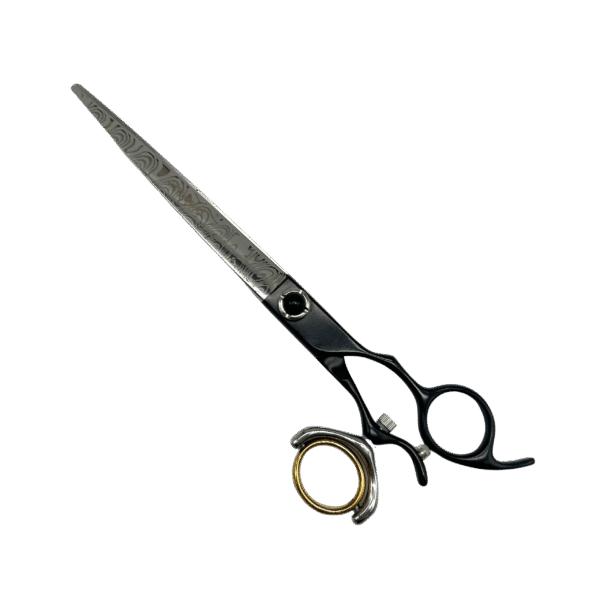
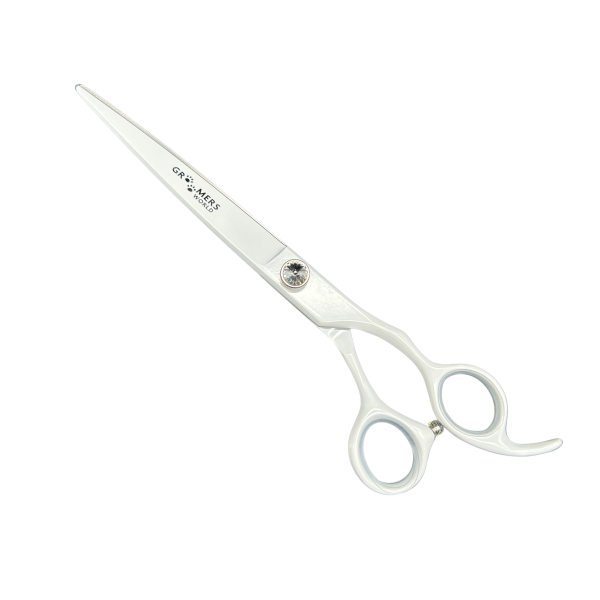
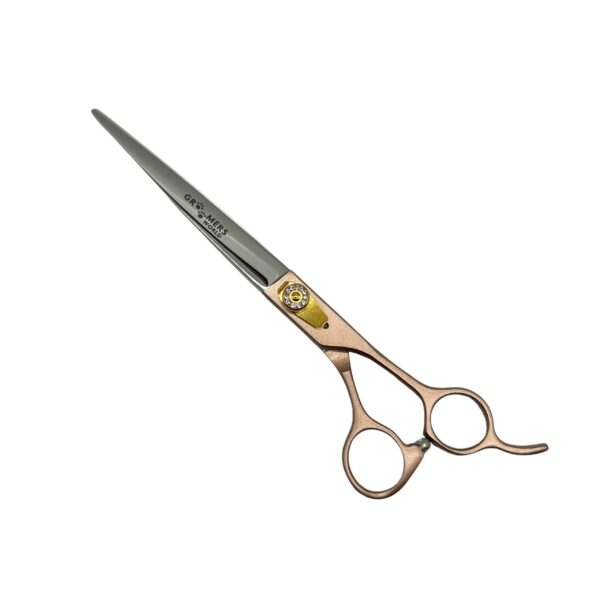
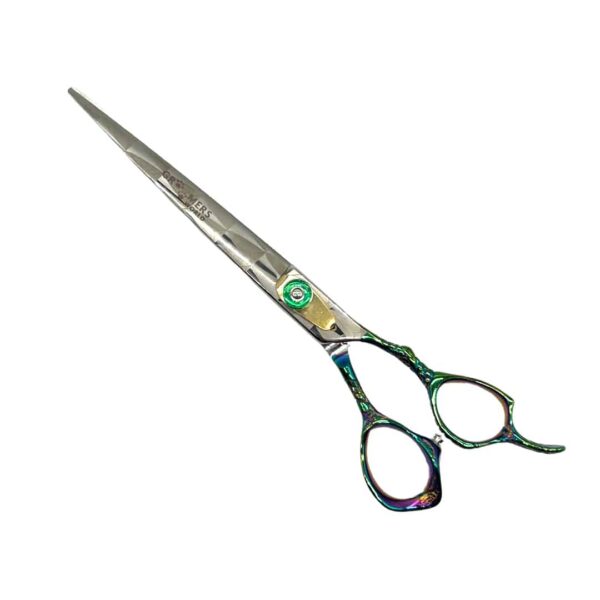
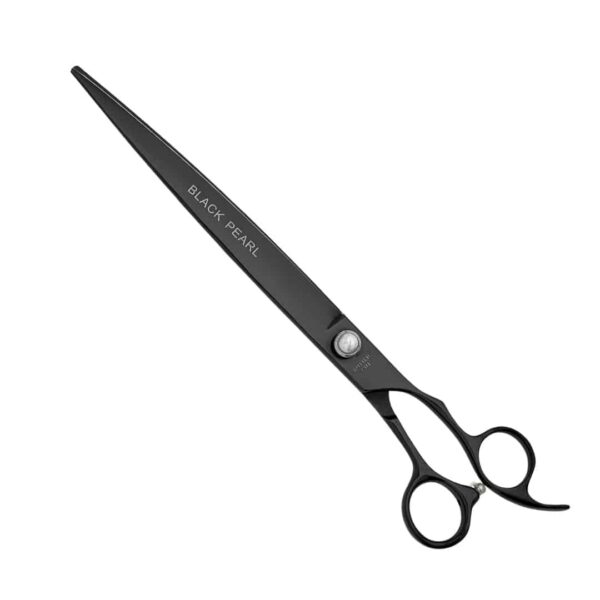
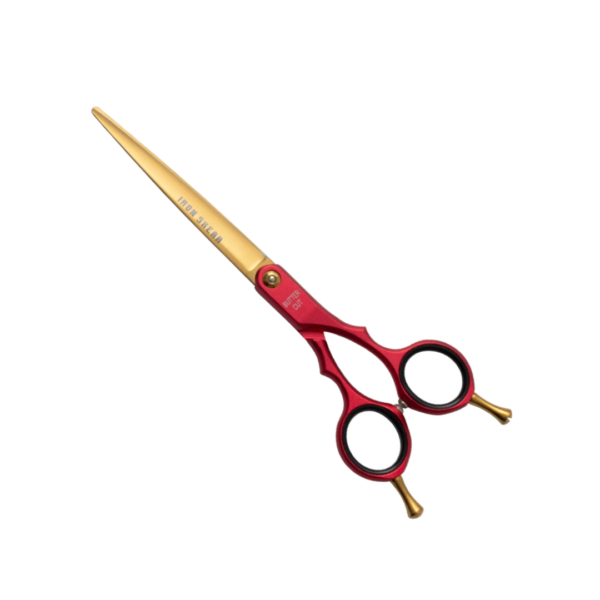
Straight dog grooming scissors offer the precision needed for shaping outlines and achieving crisp, clean lines. The options below include salon-quality scissors suitable for both professionals and dedicated home groomers who want accurate, reliable performance.

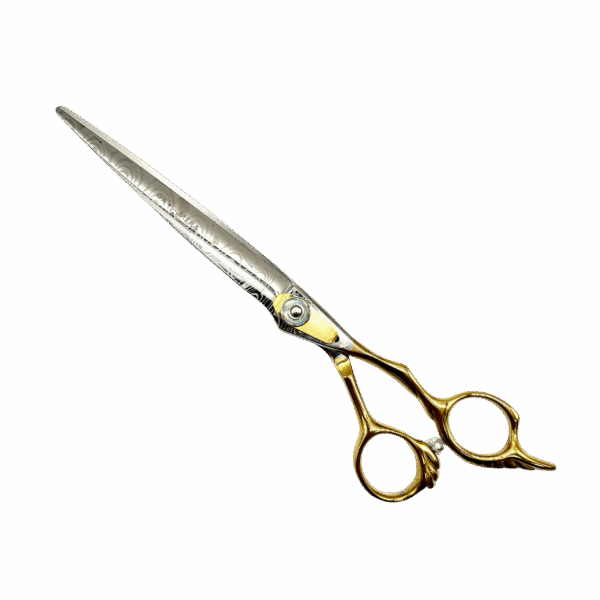




Curved Grooming Scissors
What Curved Scissors Do
Curved grooming scissors have a gentle arc in the blade that follows the natural contours of the dog’s body. This makes them ideal for creating rounded shapes and softer silhouettes, particularly on breeds where balance and symmetry are essential.
Curved scissors are a favourite among groomers who work with Doodles, Poodles, Cockapoos, Bichons and other fluffy or scissor-heavy breeds. They help create consistent curves without over-cutting.
When to Use Curved Scissors
Curved scissors are the best choice when shaping:
- Round faces
- Paws and rounded feet
- Chest and rump curves
- Top knots and headpieces
- Tails, furnishings and feathering
- Skirts on drop-coated breeds
They’re especially useful when grooming dogs with longer or plush coats, where roundness is part of the breed or pet trim style.
Benefits of Curved Scissors
The curve makes it easier to maintain symmetry across both sides of the body. They help groomers avoid jagged lines or flat spots, and they reduce the need to constantly adjust hand positioning. Curved scissors also pair perfectly with coat prep tools like slicker brushes and finishing combs.
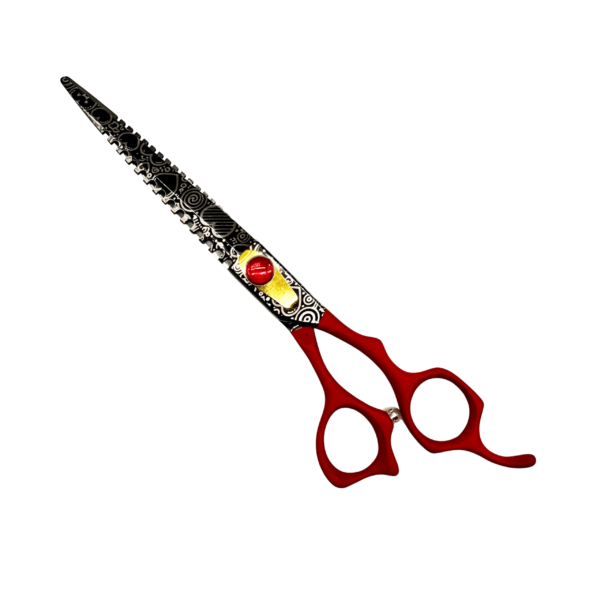
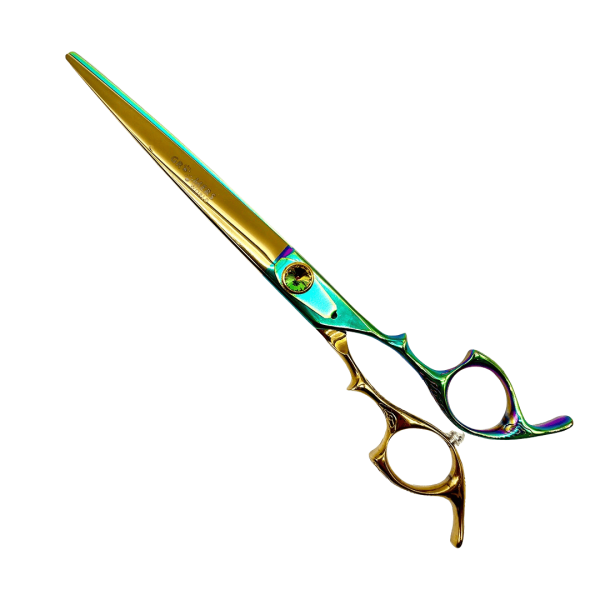
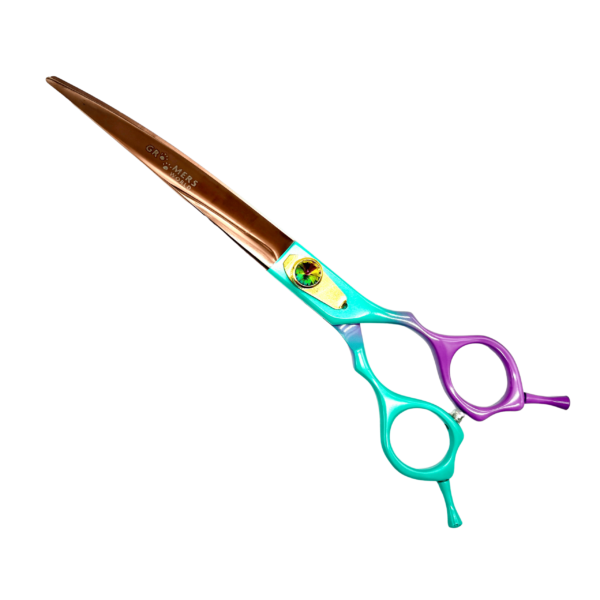
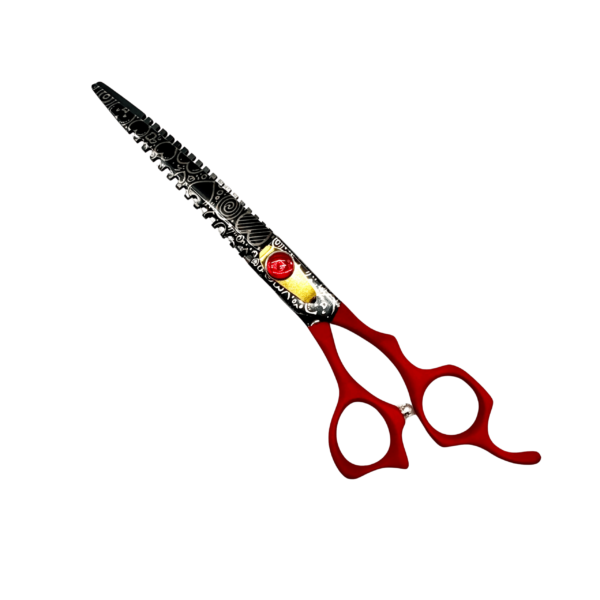
Curved dog grooming scissors help create smooth, natural curves and are perfect for shaping faces, paws, rumps and rounded outlines. The scissors below are popular with professionals who work on Doodles, Bichons and modern pet trims.

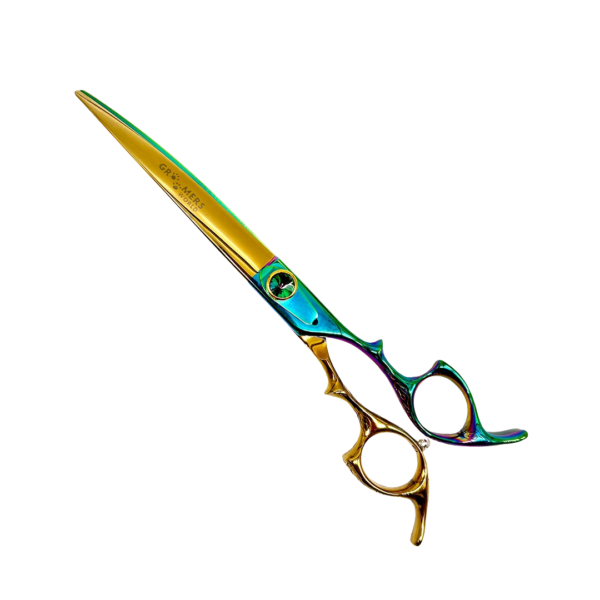

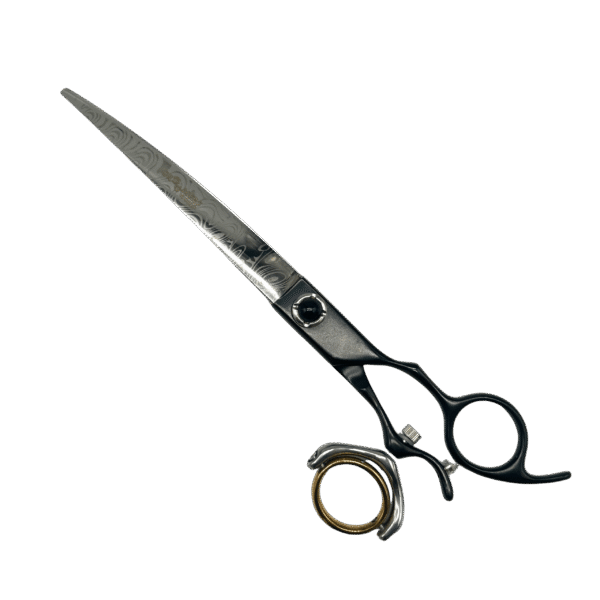
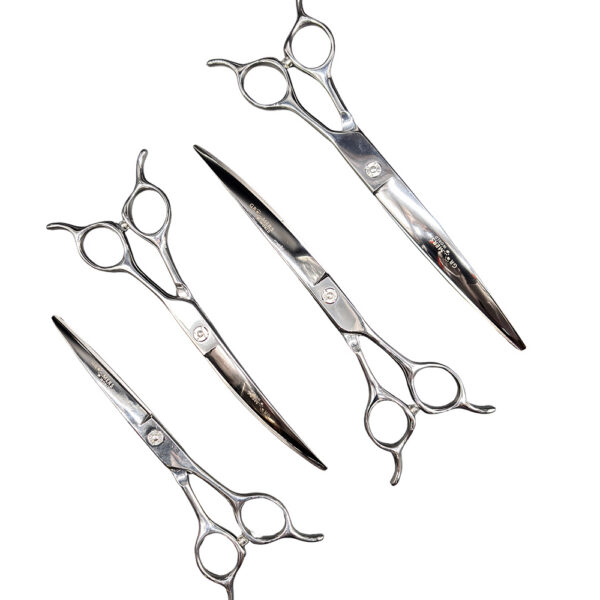
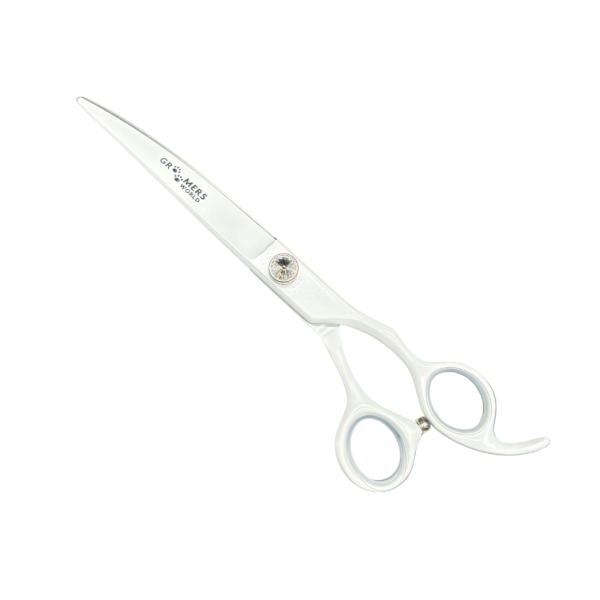
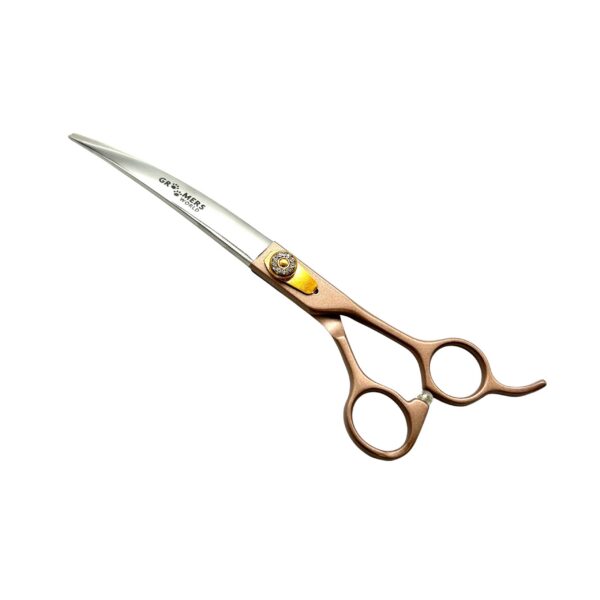
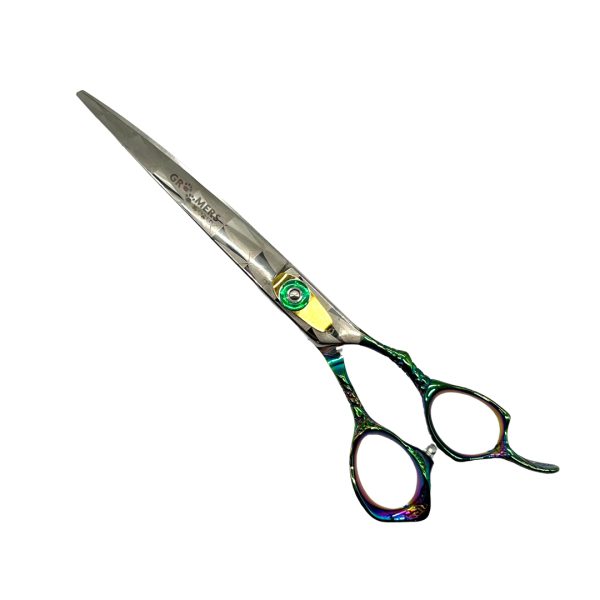
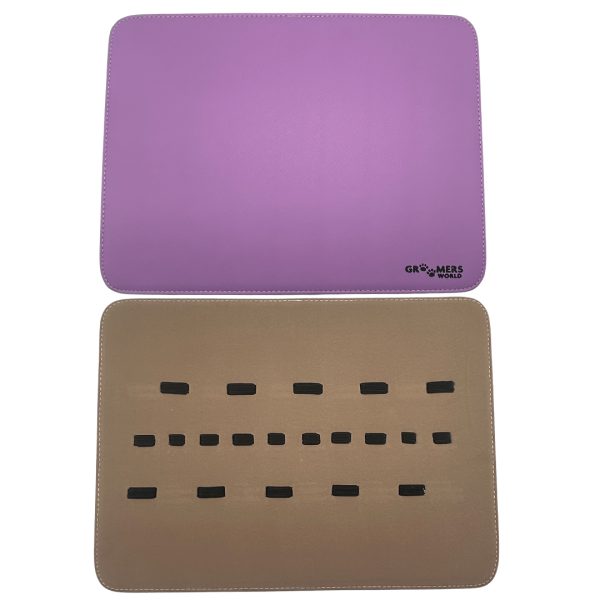

Extreme Curved – Teddy Bear Asian Fusion Set
Thinning Scissors, Chunkers & Blenders
What Thinning Scissors Do
Thinning scissors are designed to remove bulk and blend the coat without leaving harsh lines. Unlike straight or curved scissors, they cut only part of the hair with each closing of the blades, which helps soften transitions and reduce volume in thick coats.
There are three main types:
1. Thinning Scissors
- Feature fine teeth for delicate blending.
- Best for softening harsh lines, tidying faces and refining sensitive areas.
2. Blenders
- Have fewer, wider teeth, removing moderate weight.
- Excellent for blending from clipped areas into a longer coat.
3. Chunkers
- Have very wide teeth and remove a larger amount of coat.
- Ideal for shaping curly, wavy or dense coats, especially Poodles and Doodles.
When to Use Thinning & Blending Tools
These tools are ideal for:
- Blending clipper lines
- Softening scissor marks
- Reducing bulk in heavy coats
- Creating a natural finish on Cockapoos and other curly breeds
- Tidying heads and muzzles
- Blending necks, shoulders and skirts
Benefits of Thinning & Blending Tools
Thinning scissors allow for a softer, more natural look. They help avoid the “boxy” or over-scissored finish that can happen with straight scissors alone. Chunkers, in particular, are essential for achieving a fluffy, textured look in modern pet trims.
Pairing these tools with good coat preparation, such as thorough brushing, detangling and drying, helps them glide smoothly through the coat.
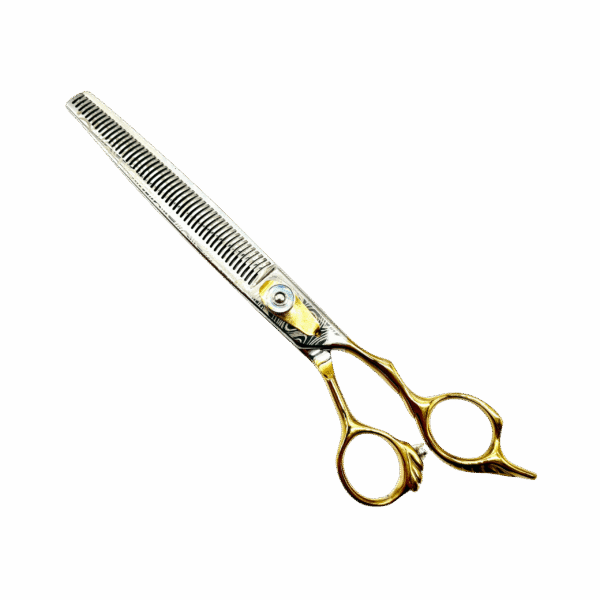
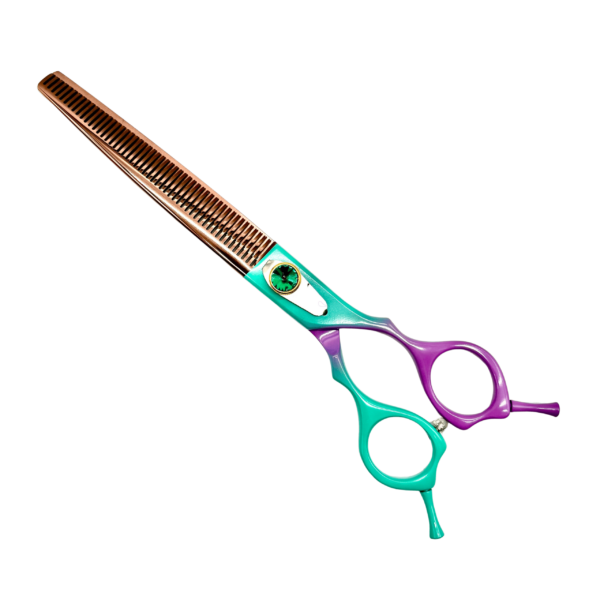
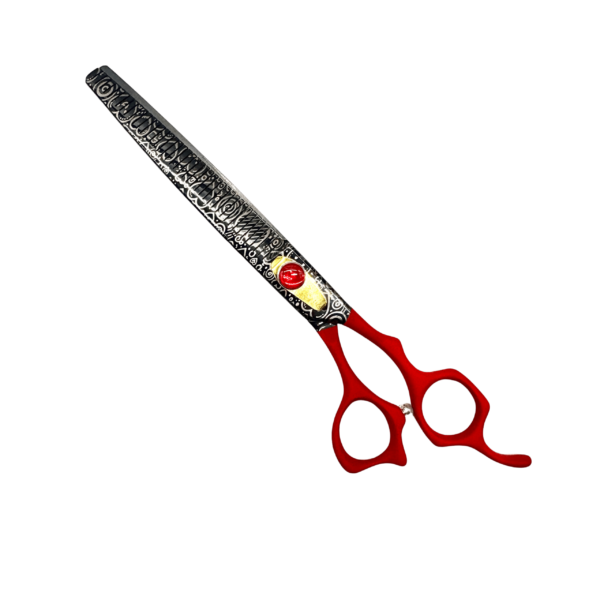
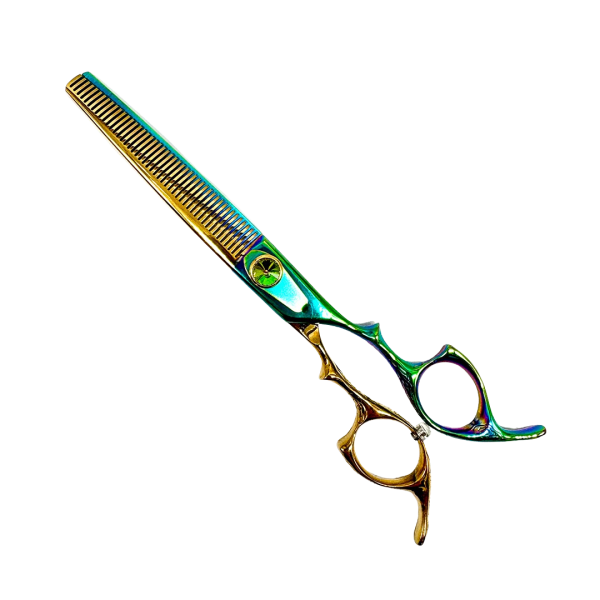
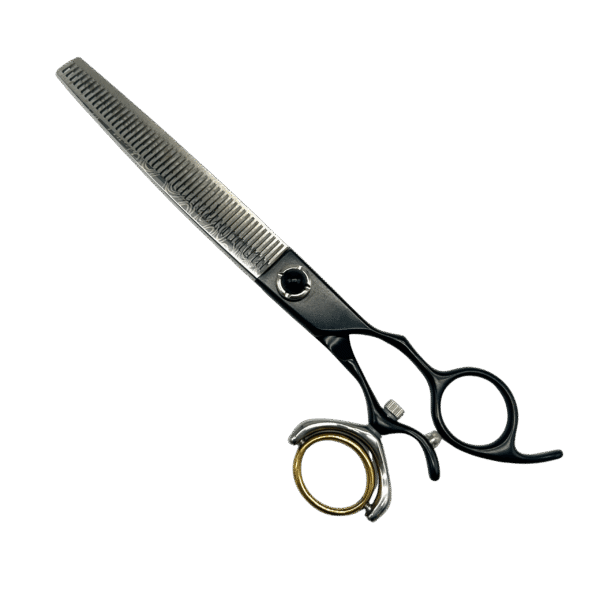
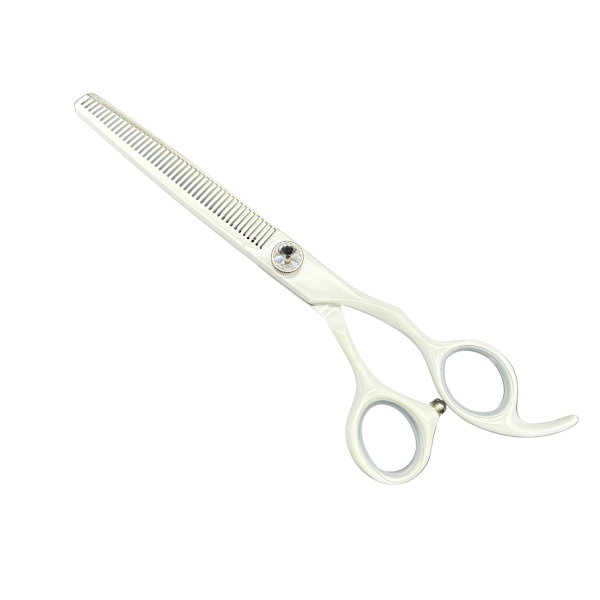
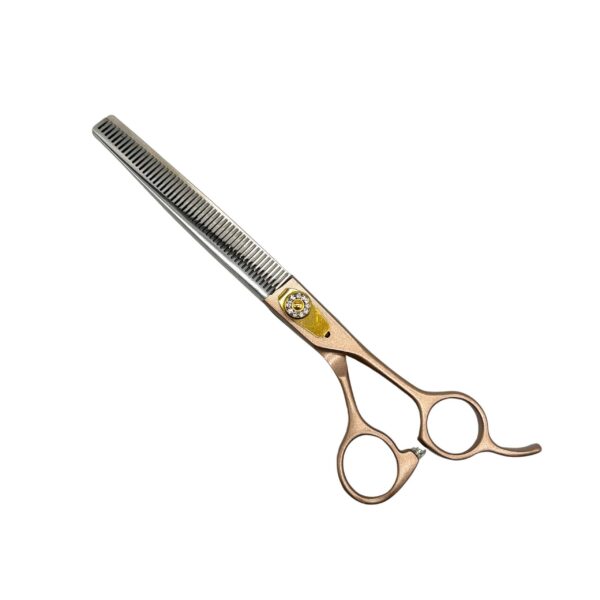
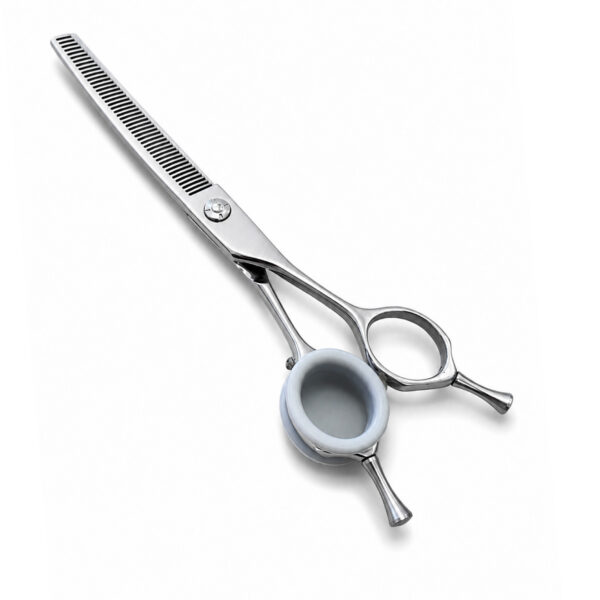
Thinning scissors, blenders and chunkers help produce a natural, blended finish and are essential for reducing bulk and softening harsh lines. The selection below works brilliantly on Doodles, Poodles and any breed that benefits from textured, seamless shaping.

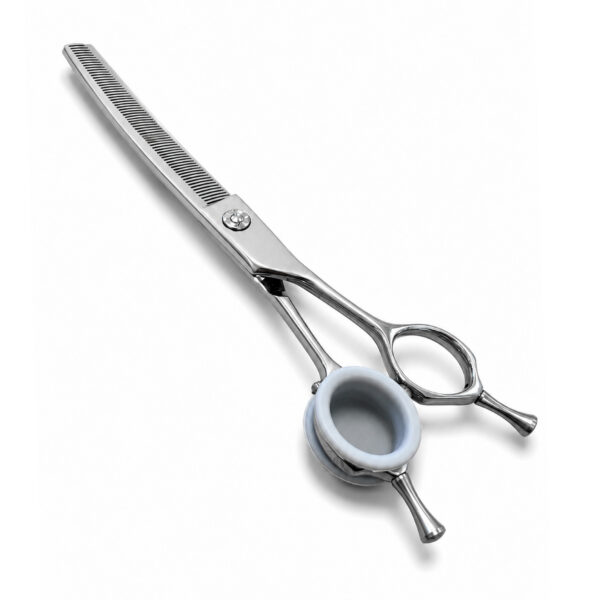
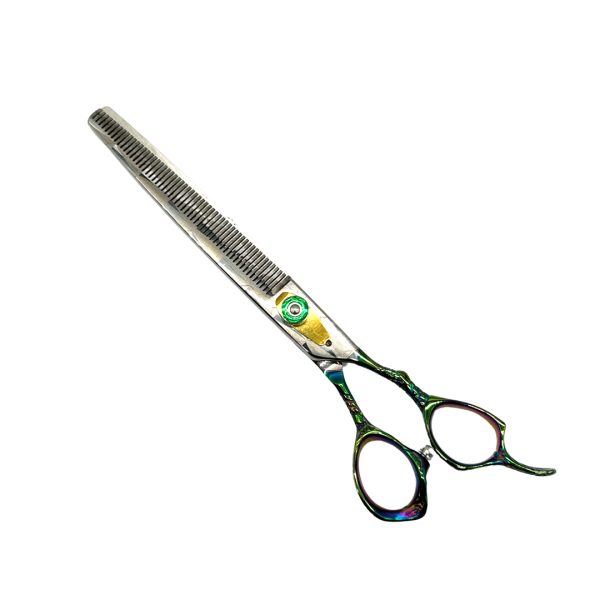

Choosing Scissors for different Coat types
The type of scissors you use will often depend on coat texture, length and breed style. Here’s how groomers typically approach different coats.
Curly & Wool Coats
These breeds benefit from:
- Curved scissors for head and body shaping
- Chunkers for bulk reduction
- Blenders for smooth transitions
- Straight scissors for defining edges
Curly coats need thorough brushing and fluff drying to get the most out of your scissoring.
Double Coats
For double coats:
- Straight scissors help tidy feathering
- Thinners soften outlines
- Blenders work well around the shoulders and breeches
These coats should not be over-shortened with scissors; instead, focus on enhancing natural shape.
Drop Coats
Drop-coated breeds often require:
- Straight scissors for lines and shaping
- Curved scissors for feet and faces
- Thinners for blending into shorter areas
These breeds also benefit from finishing combs to check symmetry.
Terriers & Harsh Coats
Although many terriers require hand-stripping, pet trims often include:
- Straight scissors for tidying
- Thinners for blending around the head and throat
- Curved scissors are sparingly used for specific shapes
These trims benefit from careful shaping and minimal scissor marks.
Professional Grooming Techniques
Improve Your Finish With Proper Preparation
No scissors – straight, curved or thinning will cut cleanly through an unprepared coat. Groomers rely on:
- High-quality slickers
- Metal finishing combs
- Detangling sprays
- Professional dryers
Mastering Pressure & Hand Position
Light, controlled scissoring produces better results. Heavy pressure can leave lines, uneven patches or “steps” in the coat.
Blending for a Natural Pet Trim
Pet owners love trims that look soft and natural rather than overly sculpted. Thinning scissors and chunkers make blending easier without removing too much length.
Working With Coat Growth Patterns
Different growth patterns require different approaches. Straight scissors work well going with the grain, while thinners are better for awkward areas like cheeks or shoulder transitions.
How to Choose the Right Scissors
Choosing the right scissors depends on:
- Breed types you groom
- Coat texture
- Your preferred grooming techniques
- Scissor length and handle comfort
- Whether you need a full scissor set or individual tools
Left-handed groomers can explore the dedicated guide: Best Left-Handed Grooming Scissors for Groomers
Groomers World offers a full range of scissors to suit every budget, from entry-level pet grooming scissors to premium salon tools built for daily use.
Straight, curved and thinning scissors each play a specific, important role in dog grooming. Straight scissors create structure and shape, curved scissors form smooth contours, and thinning scissors soften and blend for a polished finish. Combining all three gives groomers the flexibility to work with any coat type and achieve a professional result every time.
Whether you’re upgrading your salon equipment or building your first grooming kit, you can explore a wide range of high-quality grooming scissors, chunkers, blenders and scissor sets at Groomers World.
Dog Grooming Scissors – FAQ
What are the best scissors for dog grooming?
The best scissors depend on the type of grooming you do. Straight scissors are ideal for general shaping and clean lines. Curved scissors help create rounded outlines on faces, paws and body contours. Thinning scissors are best for blending and reducing bulk. Professional groomers typically use all three for a balanced finish.
Is it better to groom a dog’s coat wet or dry with scissors?
Scissoring should always be done on a clean, dry, fully brushed and fluff-dried coat. Wet or damp fur bends, making it impossible to achieve a smooth finish, and it can cause uneven cuts. Dry, well-prepared coats allow straight, curved and thinning scissors to glide easily and reduce scissor marks. High-quality dryers and prep tools help achieve the ideal finish.
What do groomers use to make dogs feel soft and fluffy?
Professional groomers rely on a combination of:
- Deep-cleaning shampoos and conditioners
- High-velocity dryers to lift and separate the coat
- Slicker brushes and metal combs
- Finishing sprays
- Thinning scissors or chunkers for soft, natural shaping
This combination results in a fluffy, salon-quality finish.
Are straight grooming scissors suitable for all breeds?
Straight scissors are the most versatile and can be used on almost any breed for general body shaping, leg lines and neat outlines. However, curved or thinning scissors are often required for curly, plush, or heavily textured coats to achieve a balanced and natural finish.
What are curved grooming scissors best used for?
Curved scissors follow the natural roundness of the dog’s body. They’re perfect for shaping:
- Poodle and Doodle faces
- Teddy bear heads
- Rounded feet
- Tails and rump contours
- Chest curves
They help maintain symmetry and create soft, rounded styles.
What do thinning scissors do in dog grooming?
Thinning scissors remove bulk and soften harsh scissor lines. They’re perfect for blending between clipped and scissored areas, tidying around the face, and finishing thick or curly coats. Chunkers and blenders (related thinning tools) help achieve a natural, textured look that pet owners love.
Are thinning scissors safe to use on all coats?
Yes, although they should be used with care on fine, silky or sparse coats to avoid removing too much fur. They’re ideal for curly, dense or plush coats where blending and bulk removal are needed.
What type of scissors do groomers use for Doodles and Poodles?
Groomers typically rely on:
- Curved scissors for round shapes
- Chunkers for removing bulk
- Blenders for seamless blending
- Straights for defining lines
Curly coats respond well to these tools, especially after proper brushing and fluff drying.
How long should dog grooming scissors last?
Quality scissors can last for years if maintained properly. Regular sharpening, correct storage, gentle cleaning and using oil ensure longevity. Groomers who work full-time often rotate multiple pairs to extend lifespan.
 Grooming Bundles
 Salon Equipment
 Dryers & Blasters
 Tables
 Clippers & Trimmers
 Blades & Attachments
 Baths
Baths Spare Parts
 Scissors
 Scissor Brands
 Groomers World Scissors
 Geib Scissors
 Kenchii Scissors
 Roseline
 Straight
 Curved
 Thinner
 Scissor Sets
 Blender & Chunker
 Left Handed
 Shampoo, Spa & Perfume
 All Shampoo
 Wahl Shampoo
 Tropiclean Shampoo
 Mud Bath & Spa
 Fragrance
 Health, Hygiene & Liquids
 Tools
Tools Hand Stripping
 Grooming Aids
 Rakes, Nail Clippers & tools
 Brushes & Combs
 Brushes
 Combs
Combs Extras
 Bandanas & Bows
 Retail
 Leads, Collars & Jackets
 Storage & Stationary
 Offers
 On Sale
 Gift Cards
 Equine
 Equine Clippers
 Equine Blades
 Equine Health, Hygiene & Liquids
 Aesculap
 Aeolus
 Andis
Andis Barbicide
 Bymilo
 Groomers Helper
 Groomers World PRO
 Groomers World
 Groomers World Classic
 Hatchwells
 Heiniger
 Joyzze
 Leucillin
 Oster
Oster Roseline
 Tropiclean
 Wahl
Wahl